


Alpine View House
A custom home designed for a steep mountain site
4345 Sq Ft | 3 Bedrooms | 3.5 Baths

Project overview
Alpine View House is a custom home developed for a steep mountain site where slope, climate, and exposure all shape the design.
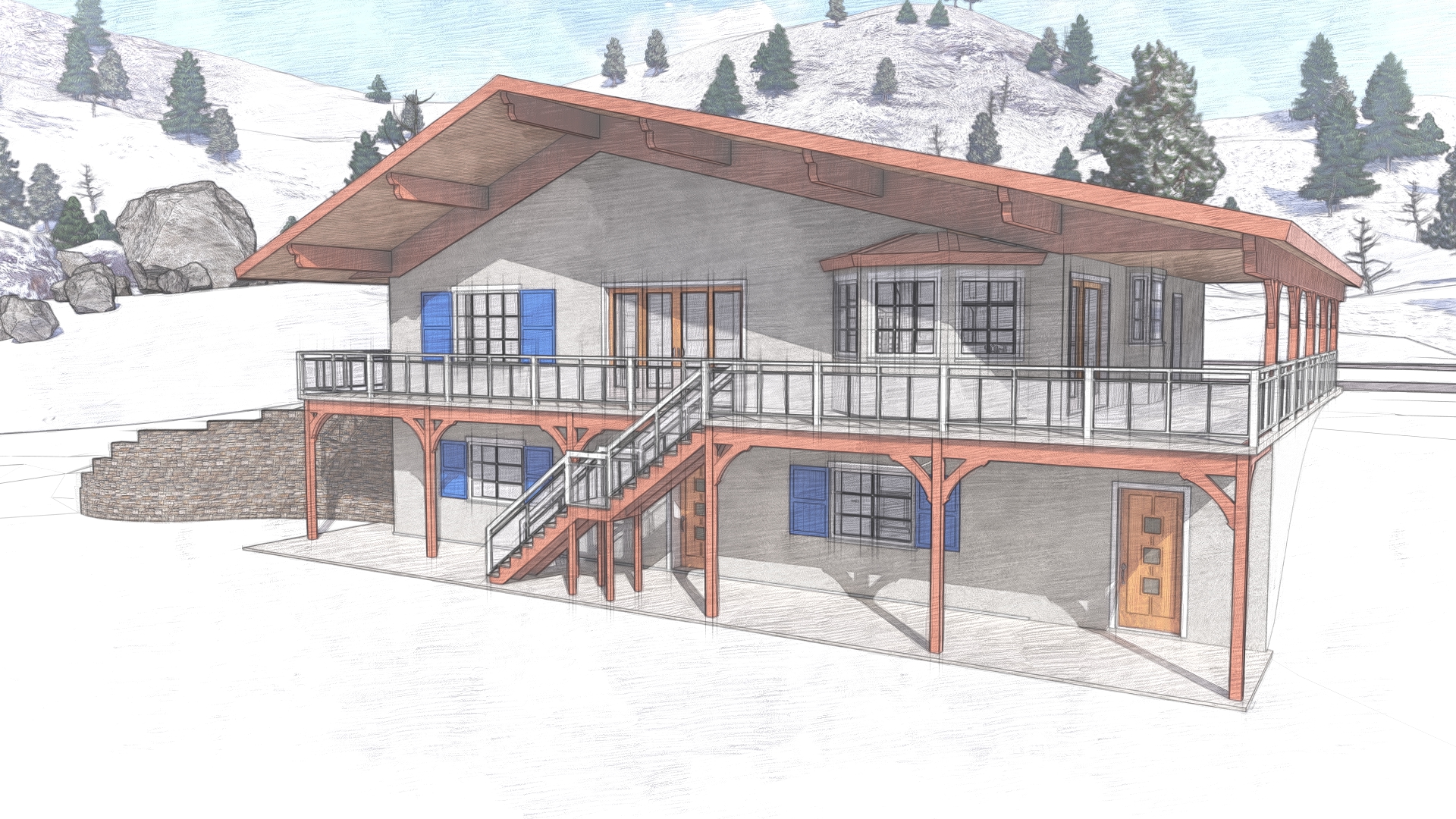
The home draws from alpine and chalet precedents: deep roof overhangs that manage snow load and shed water, exposed timber structure that expresses how the building is built, and a stepped section that follows the terrain rather than leveling it. Those aren’t stylistic choices applied after the fact. They’re the logic of the building, drawn from what mountain construction has developed over generations because it works.
Site response
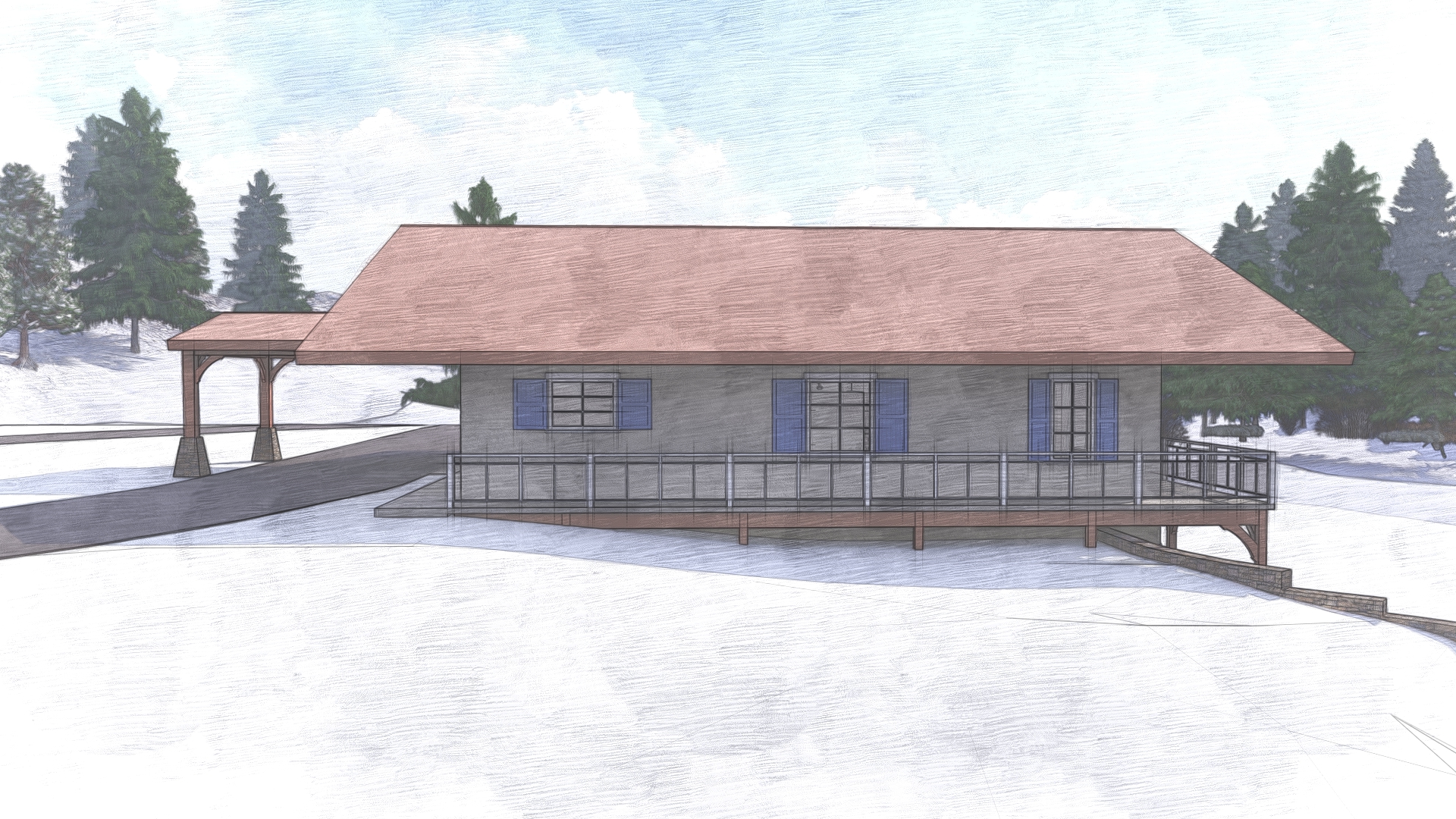
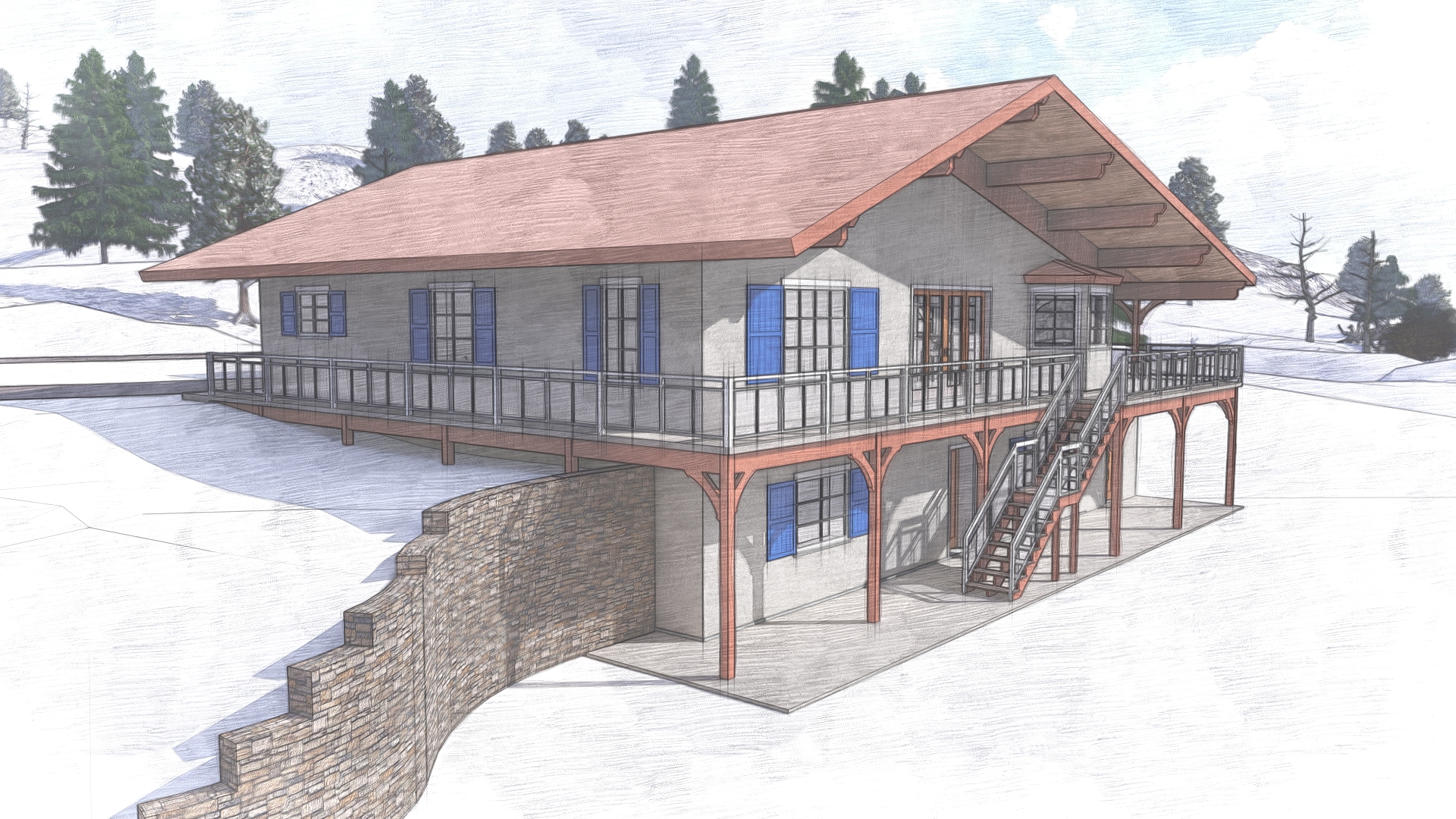
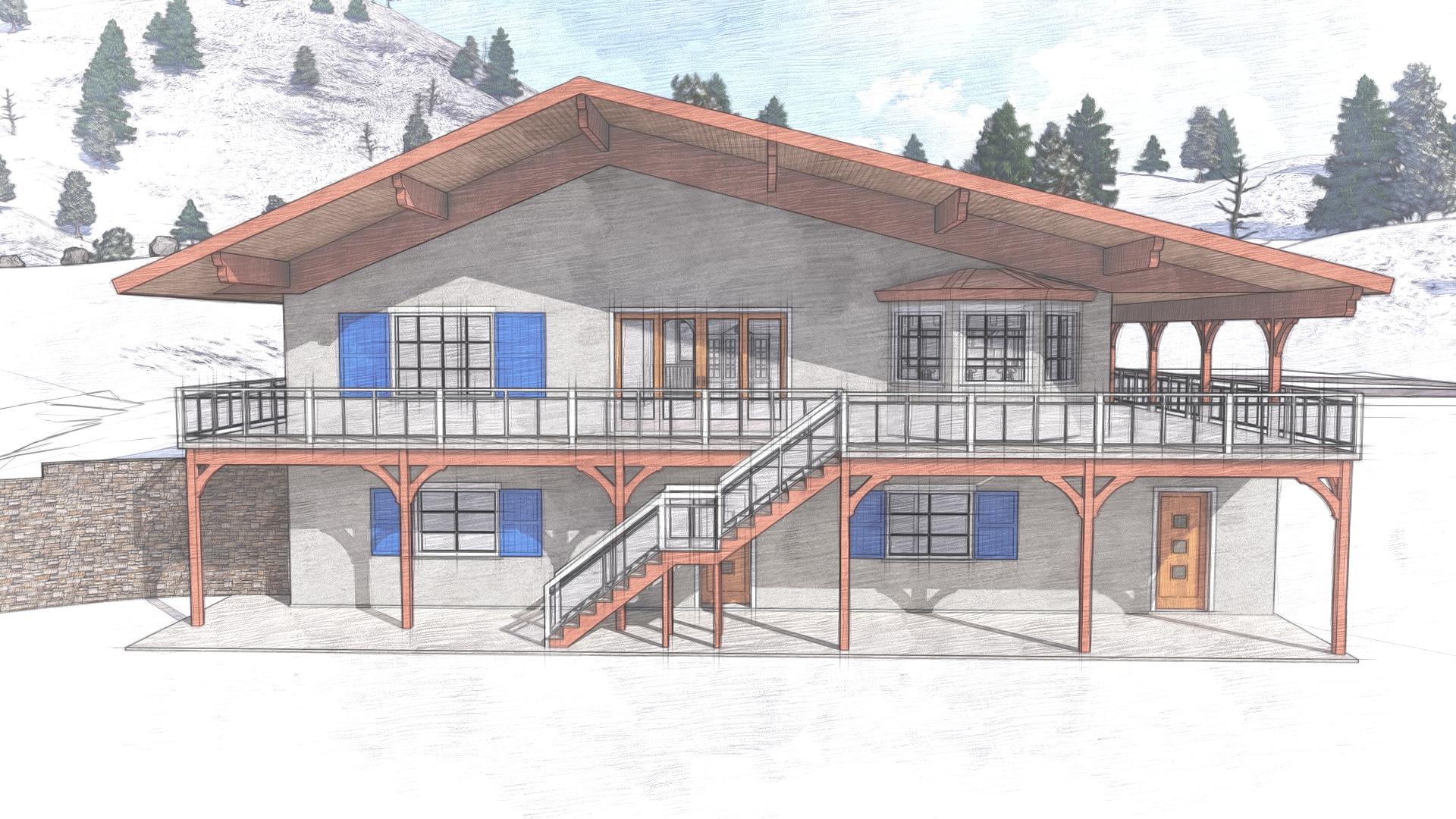
The structure steps down the slope to create an elevated main level and a walk-out lower level, minimizing excavation and keeping the building’s footprint close to the natural grade. The main living level is elevated to capture long-range mountain views.
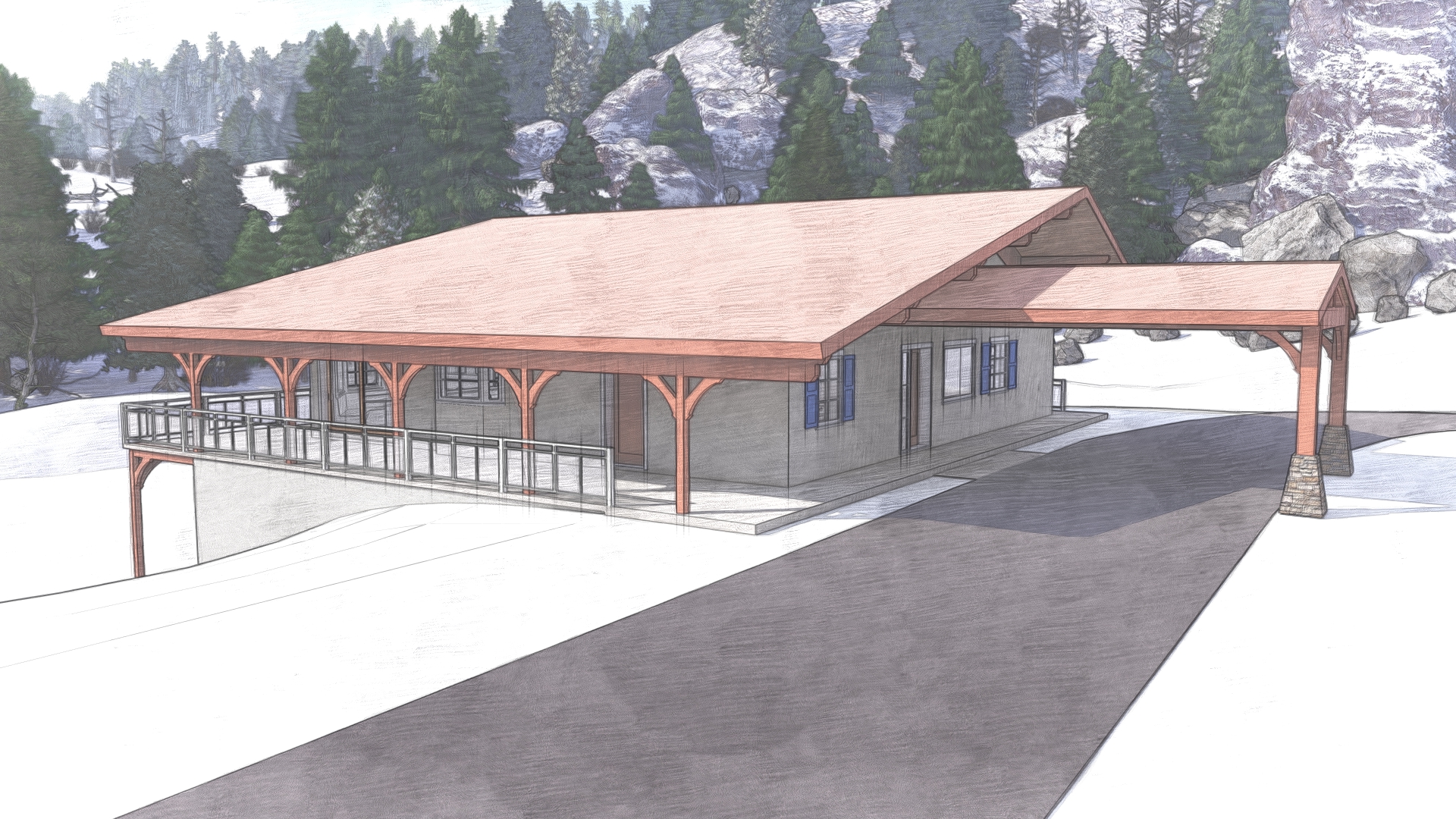
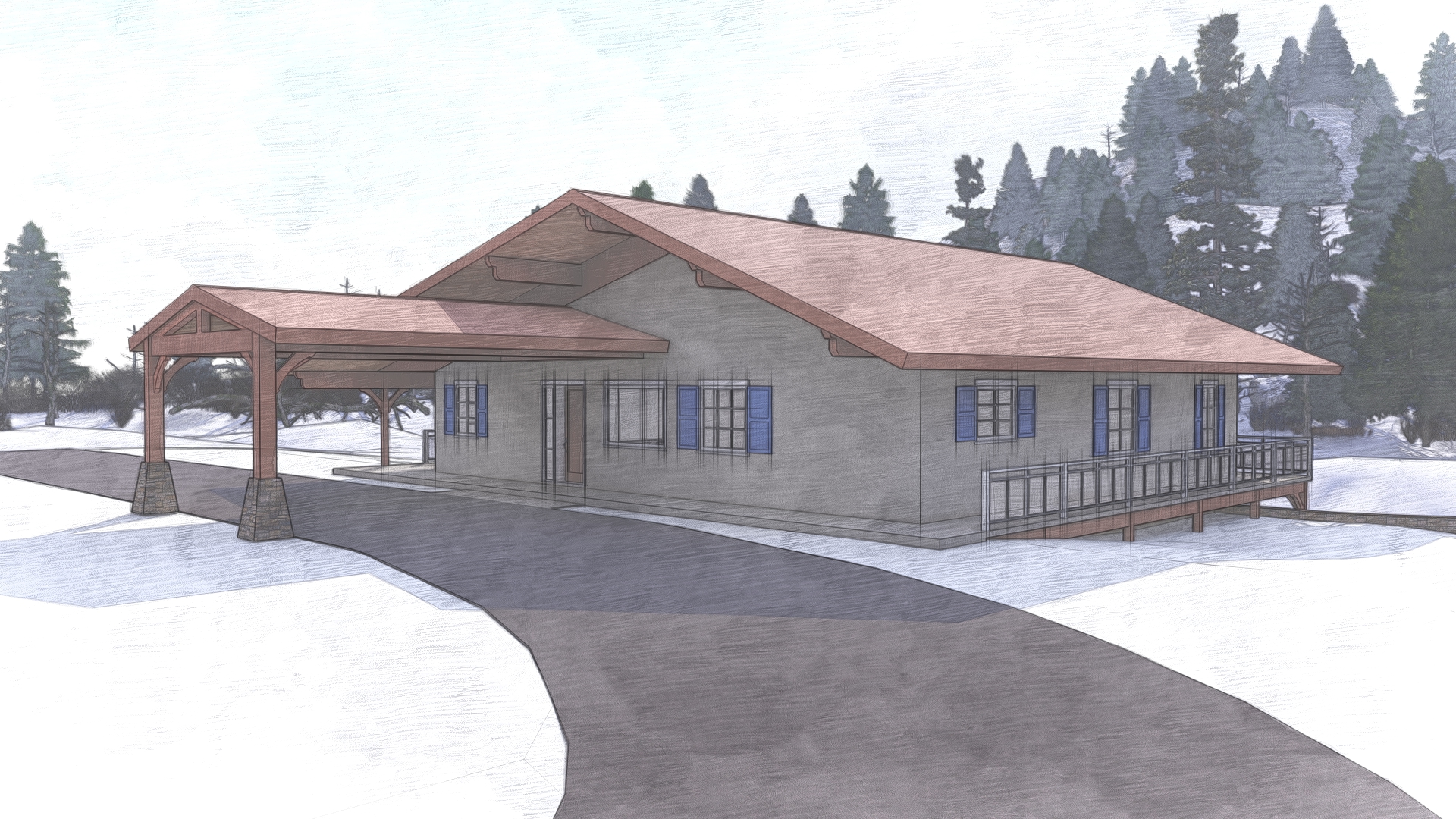
Arrival is organized at a higher point on the site so the entry sequence builds before the views open up at the main level. On a steep site with significant views, the approach sequence is part of the design, not just a path to the front door.
Layout and living experience
The main living level puts kitchen, dining, and living spaces at the top of the section with direct access to the wrap-around deck and the mountain views beyond. The lower walk-out level provides additional living space, bedrooms, and direct access to grade.
The slope creates a natural separation between the main gathering areas above and the private spaces below without requiring long corridors or mechanical separation.
At 4,345 square feet across two levels, Alpine View House is substantial, but the two-level organization keeps the scale manageable and the circulation straightforward.
Structure and roof strategy
The structural system uses exposed heavy timber framing that does double work: it carries the loads and it defines the character of the home. In alpine construction, expressing the structure rather than concealing it is practical as much as aesthetic.
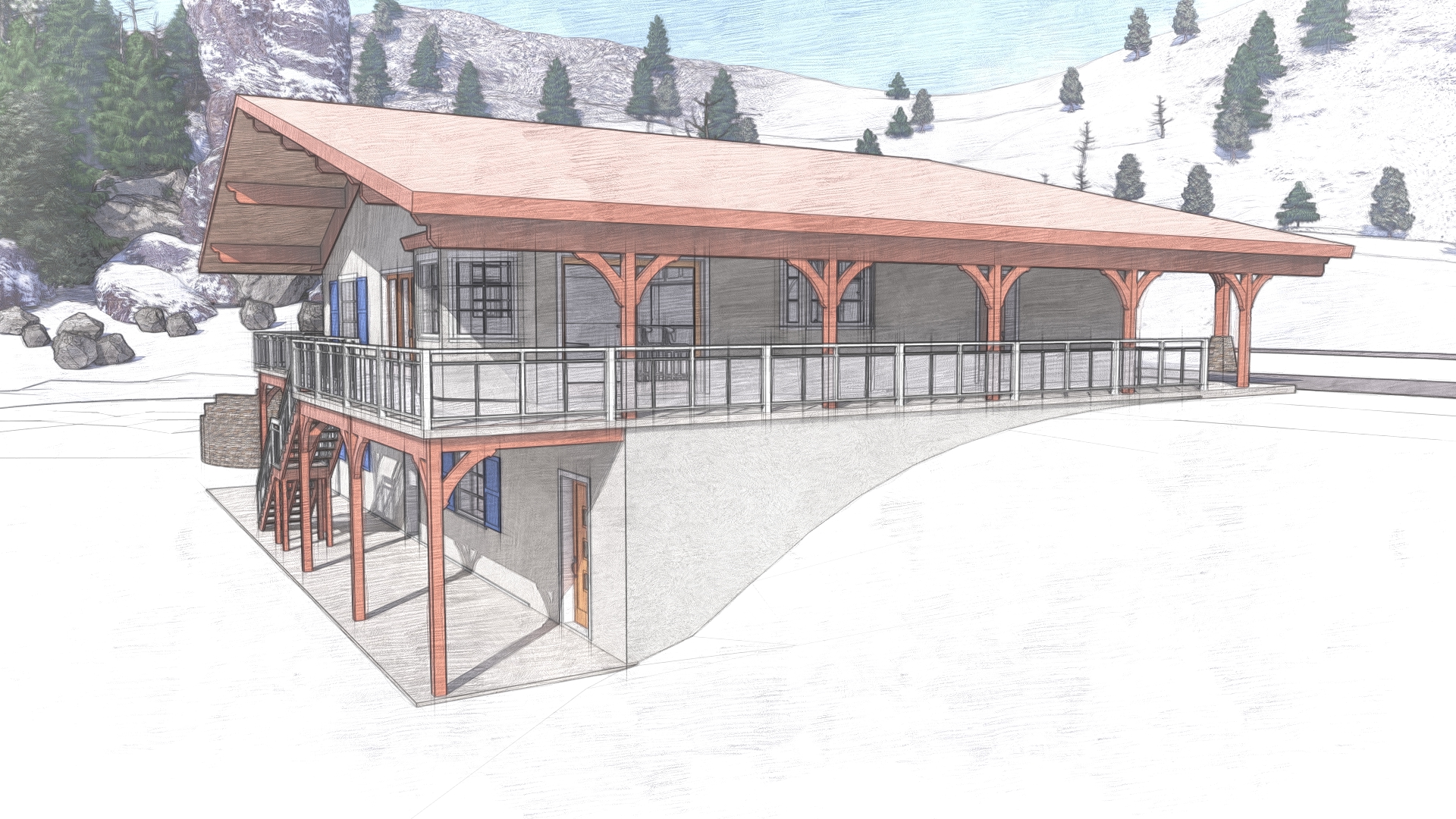
Heavy timber handles snow loads effectively, ages well in mountain climates, and reads honestly as what it is. The roof forms use steep pitches and deep overhangs to shed snow quickly, protect the exterior walls from water infiltration, and keep covered outdoor spaces usable through most of the season.
Those decisions were coordinated with the floor plan and structural layout early so the roof geometry, the timber sizing, and the wall conditions all work as a single system rather than being resolved independently.
Outdoor living
The wrap-around deck at the main level is the outdoor centerpiece of the home. Covered sections under the deep roof overhangs provide weather protection and allow the deck to be used even during light snow or rain. Open sections extend into the views without obstruction.
The deck is sized and positioned so it functions as a genuine extension of the main living level, not a narrow walkway around the perimeter. In a mountain environment where the outdoor experience is most of the reason you’re there, that distinction matters.
Materials and character
The material palette for Alpine View House is built around durability in a mountain climate. Natural stone at the retaining walls and base of the structure anchors the building to the site and handles ground moisture and freeze-thaw cycles without deteriorating.
Heavy timber framing is expressed throughout, particularly at the covered outdoor areas where the structure is most visible. Exterior cladding uses wood or engineered wood products selected for performance in high-elevation conditions: dimensional stability, resistance to moisture cycling, and compatibility with the alpine character of the home.
Metal roofing handles snow shedding better than any other roof material at steep pitches and requires minimal maintenance over the life of the building.
Project summary
Mountain residential design is one of the most demanding contexts in residential work. Snow loads, freeze-thaw cycles, high-elevation exposure, and steep terrain all have to be addressed in the design, not discovered during construction.
Alpine View House handles all of those through decisions made early: the structural system, the roof geometry, the material selection, and the site strategy were resolved together before the floor plan was locked in. At 4,345 square feet on a steep site, it’s a complex project. The complexity is in the drawings, which is where it belongs.