


Blue Harbor House
A custom home designed for a coastal environment
Approx. 1,800–2,600 Sq Ft | 3–4 Bedrooms | 2–3 Baths
Pile Foundation
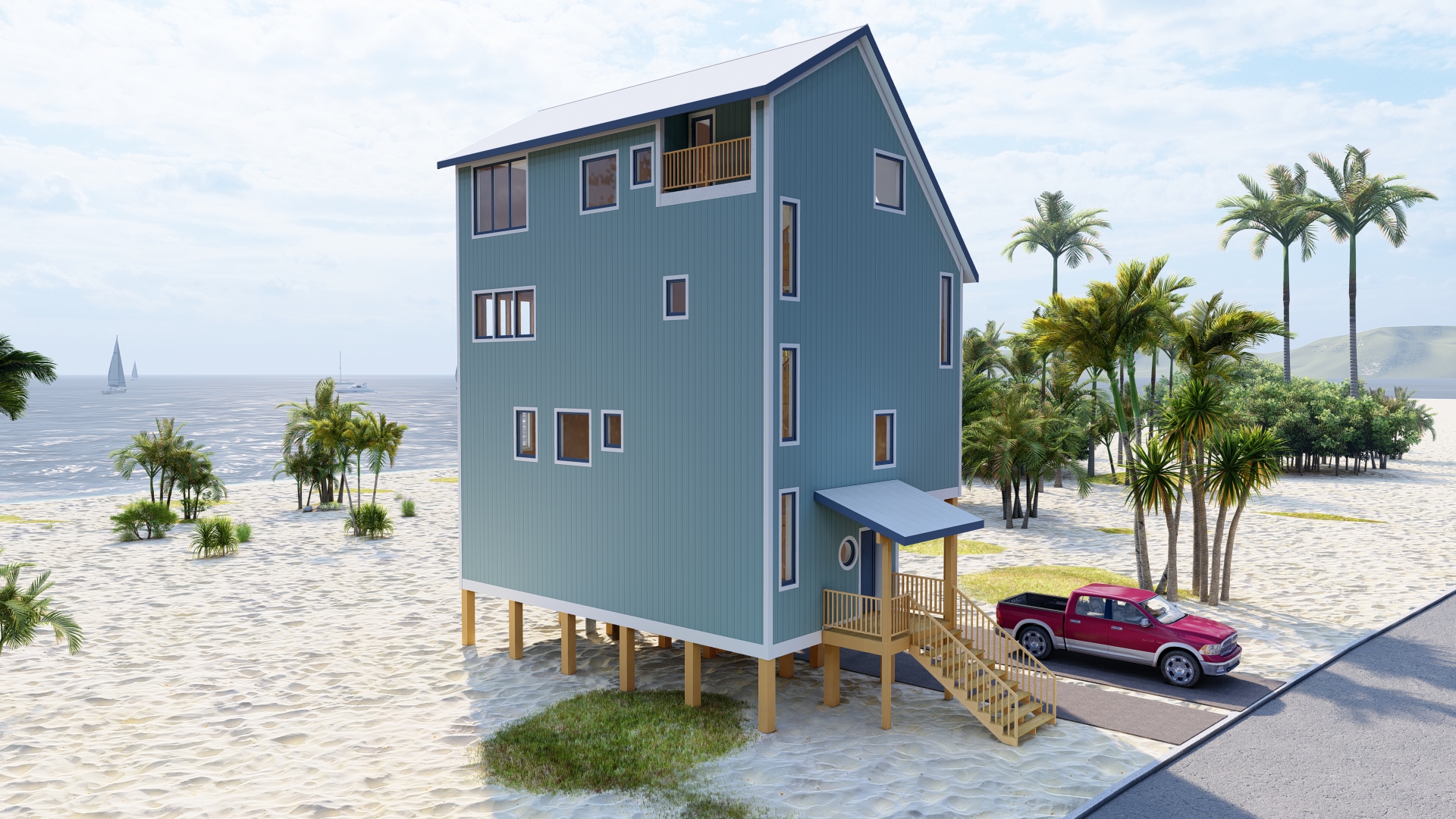
Project overview
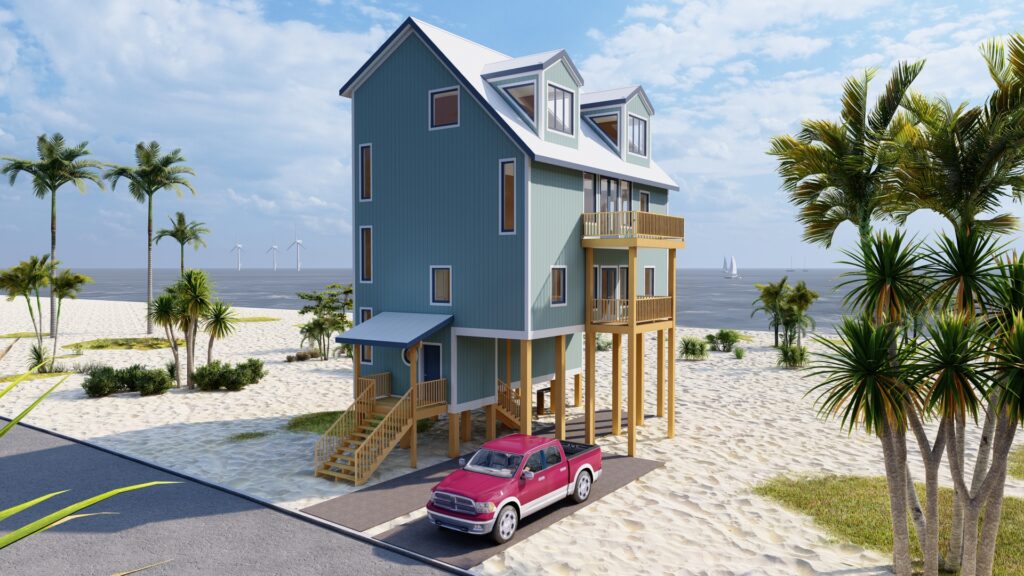
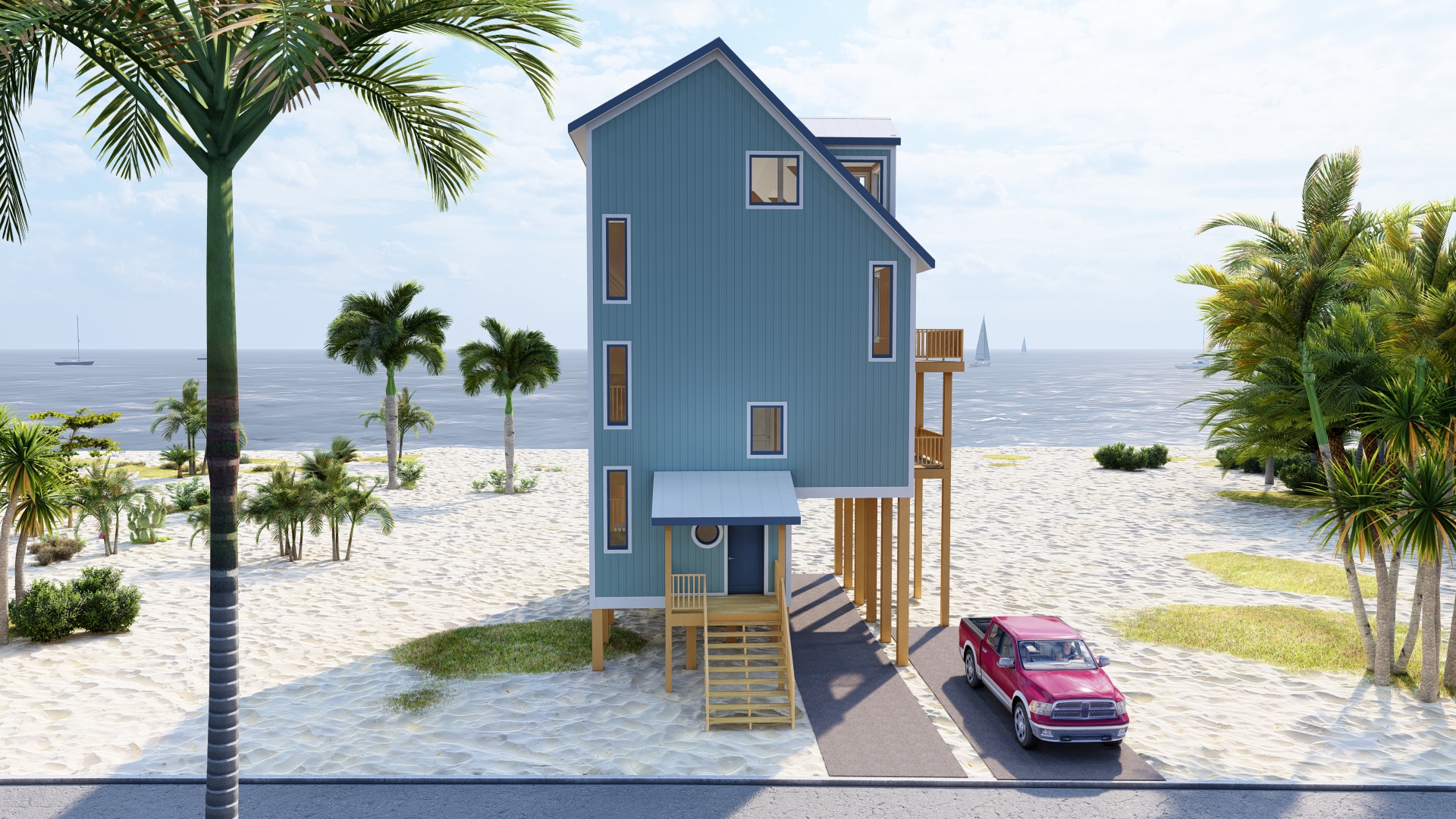
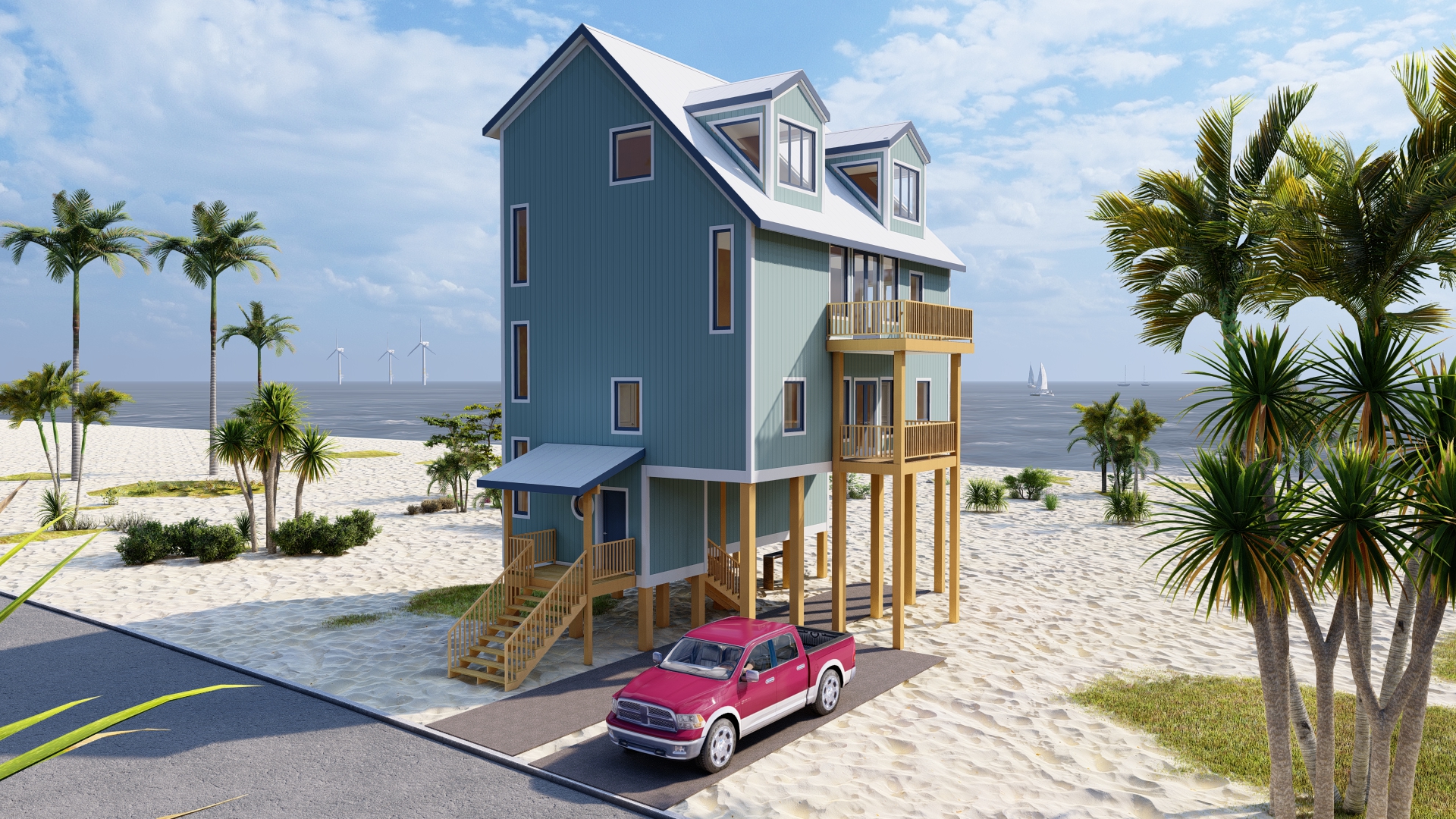
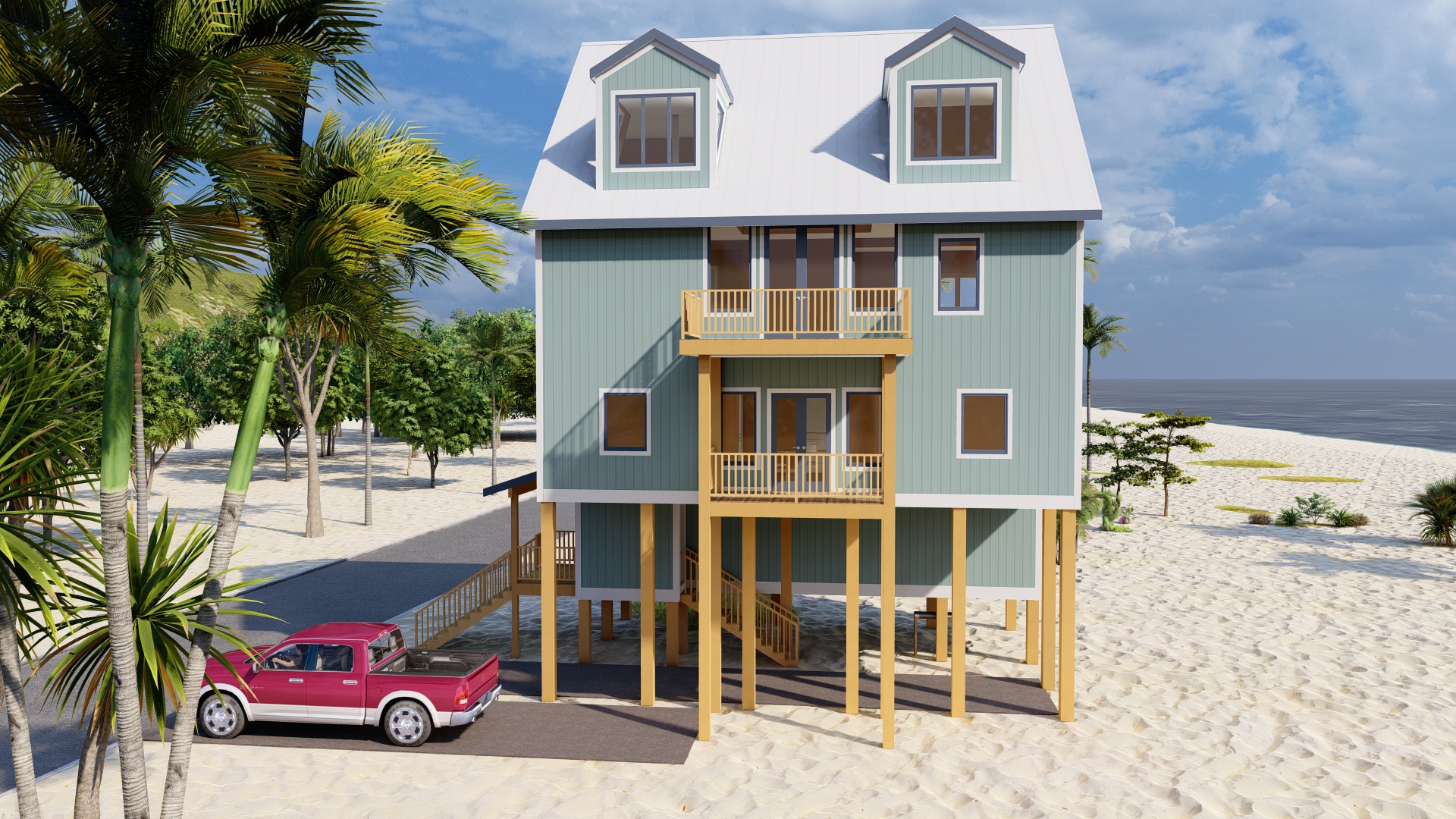
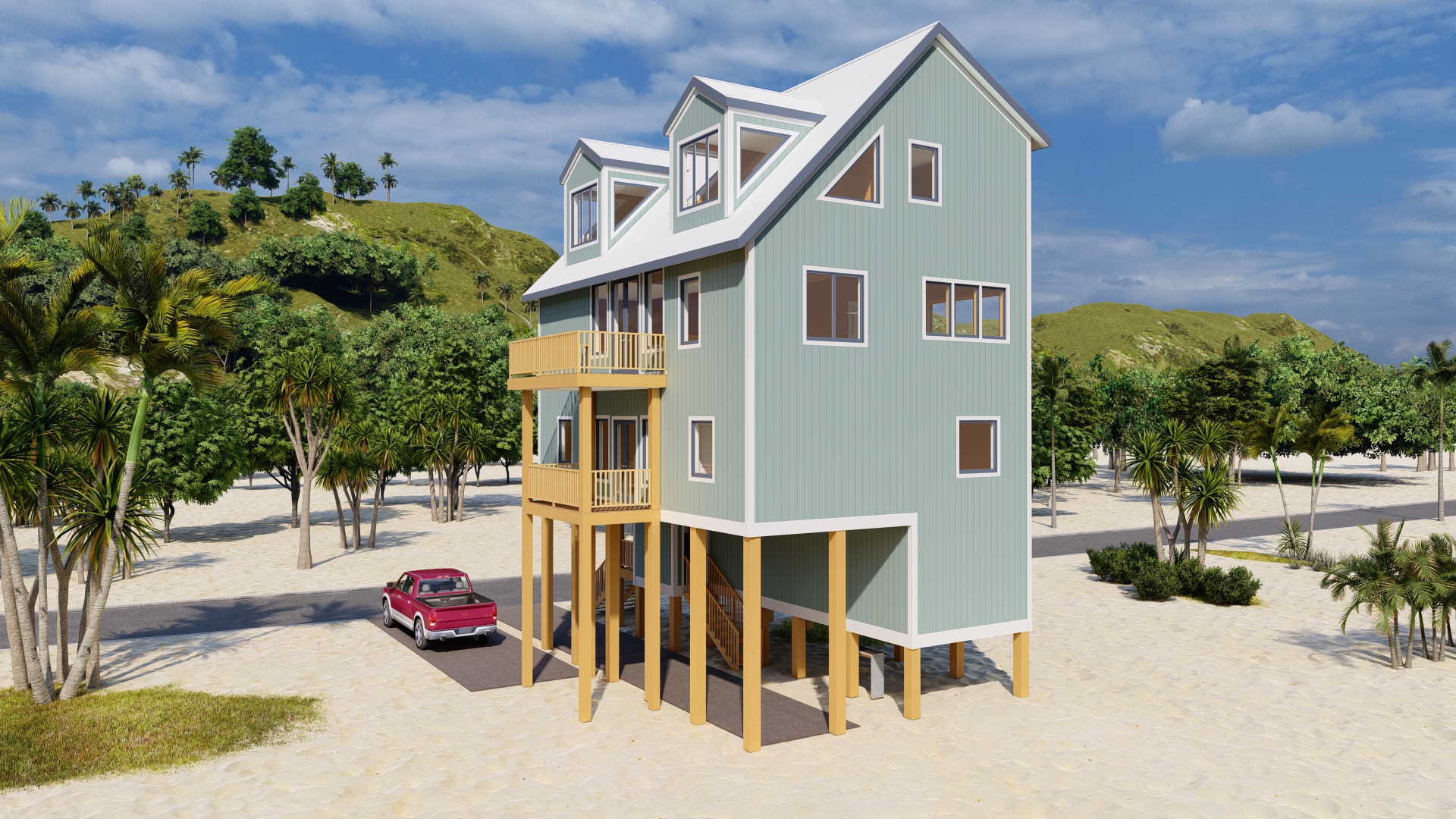
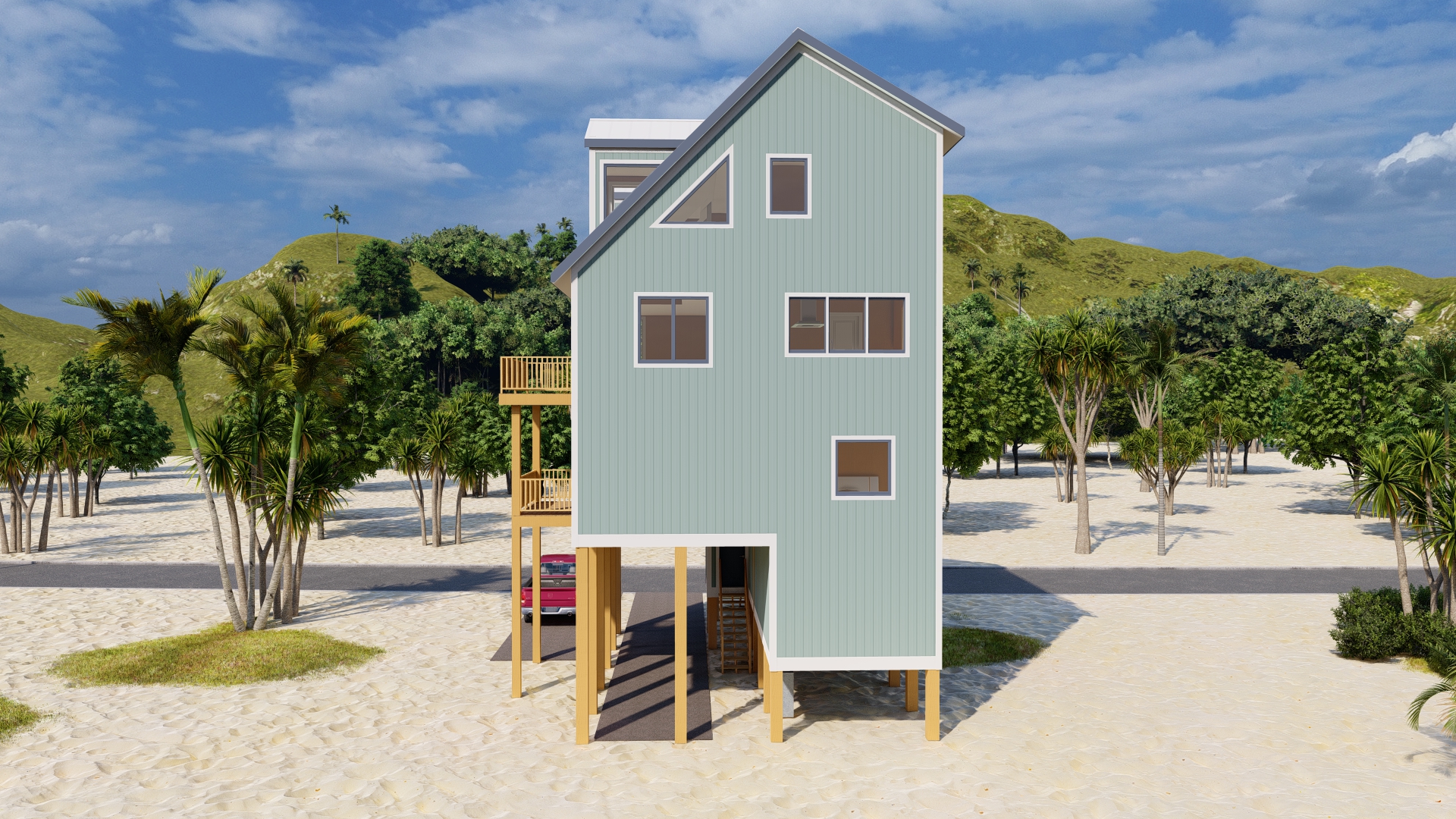
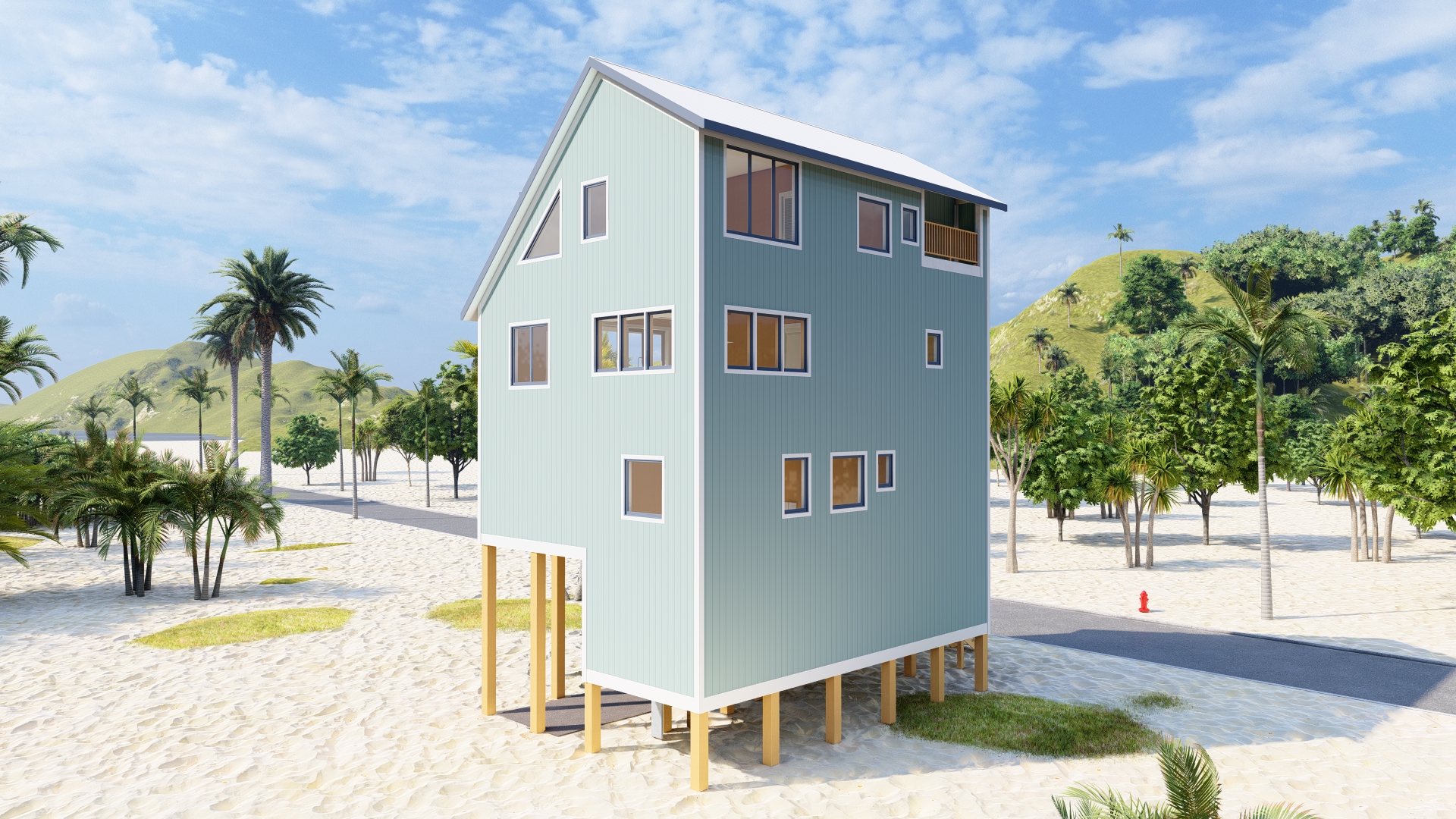
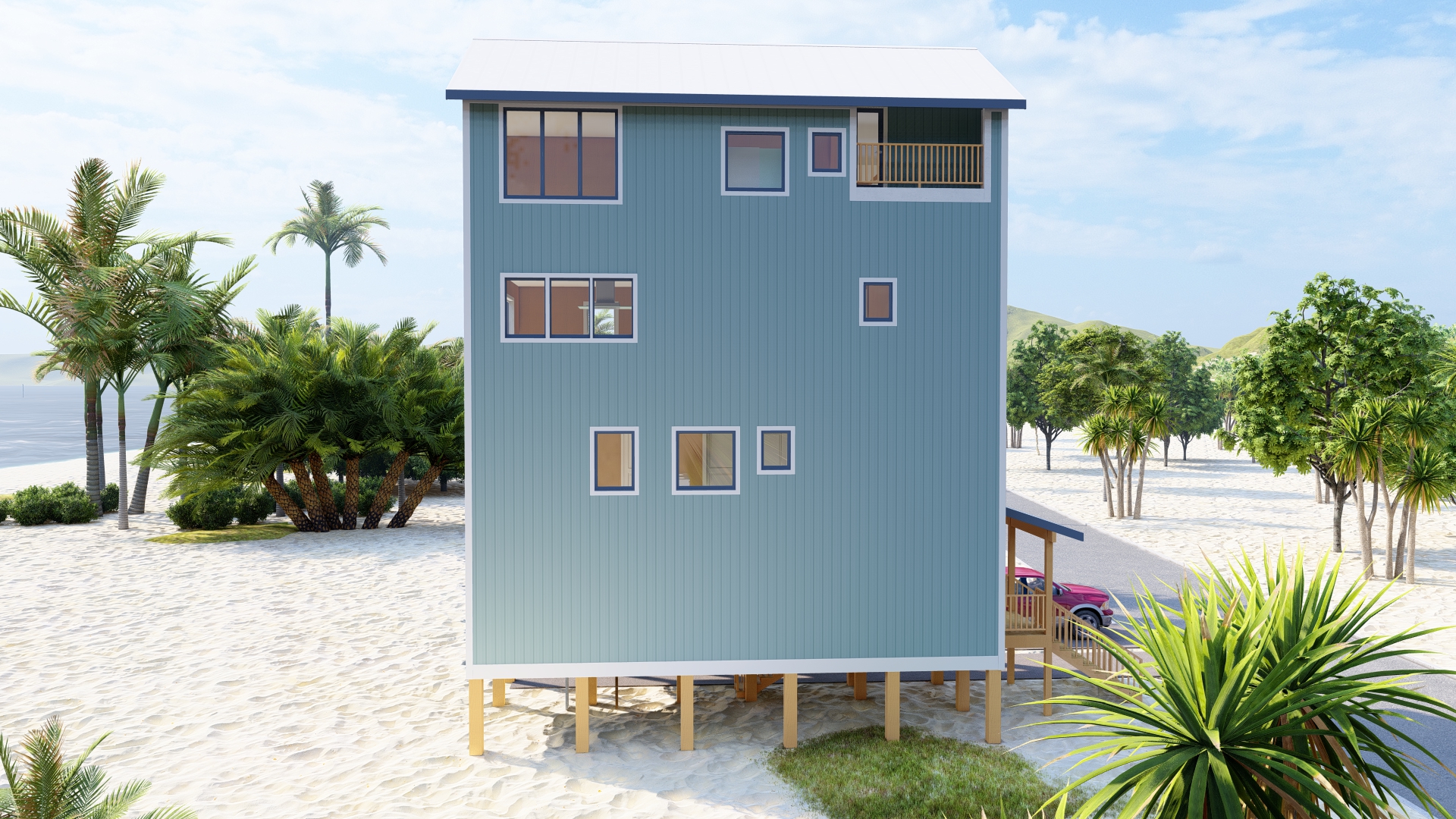
Blue Harbor House is a custom home designed for a coastal site where the environment sets the terms. A pile foundation lifts the structure above flood and storm surge risk. Orientation captures prevailing breezes and water views.
The vertical layout stacks living spaces above ground-level parking and access to put the rooms where they perform best. Every significant decision on this project traces back to the site and the climate, not to a style applied after the fact.
Site response
The home is oriented to capture water views and prevailing coastal breezes while keeping the primary living spaces shaded during the hottest parts of the day.
Elevation on pilings keeps the structure clear of flood risk and allows water and air to move freely beneath the building. The footprint is compact by design, as coastal lots are often constrained, and a tight, well-organized layout performs better than one that sprawls.
Coastal response and elevation
Pile foundations are standard in coastal construction for good reason. They lift the structure above base flood elevation, allow storm surge to pass beneath the building, and reduce long-term maintenance issues associated with ground contact in a salt air environment.
The elevation also shapes how the home is organized: parking, storage, and access at ground level; living, dining, and outdoor spaces above where the views and breezes are.
Structure and buildability
Pile foundation construction requires more structural coordination than a conventional foundation. Pile spacing, beam sizing, and floor framing all have to be resolved together, and they have to account for both gravity loads and lateral forces from wind and wave action.
Getting those decisions right in the design phase means the builder has clear drawings and the structure performs as intended when coastal conditions test it.
Layout and living experience
The vertical layout puts living, dining, and kitchen at the main elevated level with direct access to covered outdoor spaces. Bedrooms are positioned to take advantage of views and cross-ventilation.
The stair and circulation are kept simple so the home is easy to move through despite spanning multiple levels. At the scale of this home, every square foot has to earn its place. The layout of Blue Harbor House is organized so none of it is wasted.
Outdoor living
Covered porches at the main living level extend the usable square footage of the home without adding enclosed space. On a coastal site, a well-positioned covered porch does more work than almost any other design element: it provides shade, captures breezes, frames water views, and creates a space that’s comfortable in most weather conditions.
The transition from interior to porch to open deck is where coastal living actually happens, and the layout is organized around that sequence.
Materials and character
Coastal material selection is driven by durability first. Salt air accelerates corrosion and degrades finishes faster than almost any other environment.
Fiber cement siding, composite decking, stainless or hot-dipped galvanized hardware, and impact-rated glazing are the practical choices for a home that needs to perform over decades, not just look good at the time of installation.
The forms are kept simple and the detailing clean, which also reduces the number of joints and transitions where moisture can find its way in.
Project summary
Coastal residential design asks you to solve several problems at once: a structure that handles flood and wind loads, materials that hold up in salt air, a layout that makes the most of a constrained footprint, and outdoor spaces that work with the climate rather than fighting it.
Blue Harbor House addresses all of those through decisions made early, before the floor plan was set. That’s the difference between a coastal home that performs for decades and one that starts showing its problems within a few years of construction.