


Texas Hill Country
Cedar Lake Ranch
A ranch estate in the Texas Hill Country
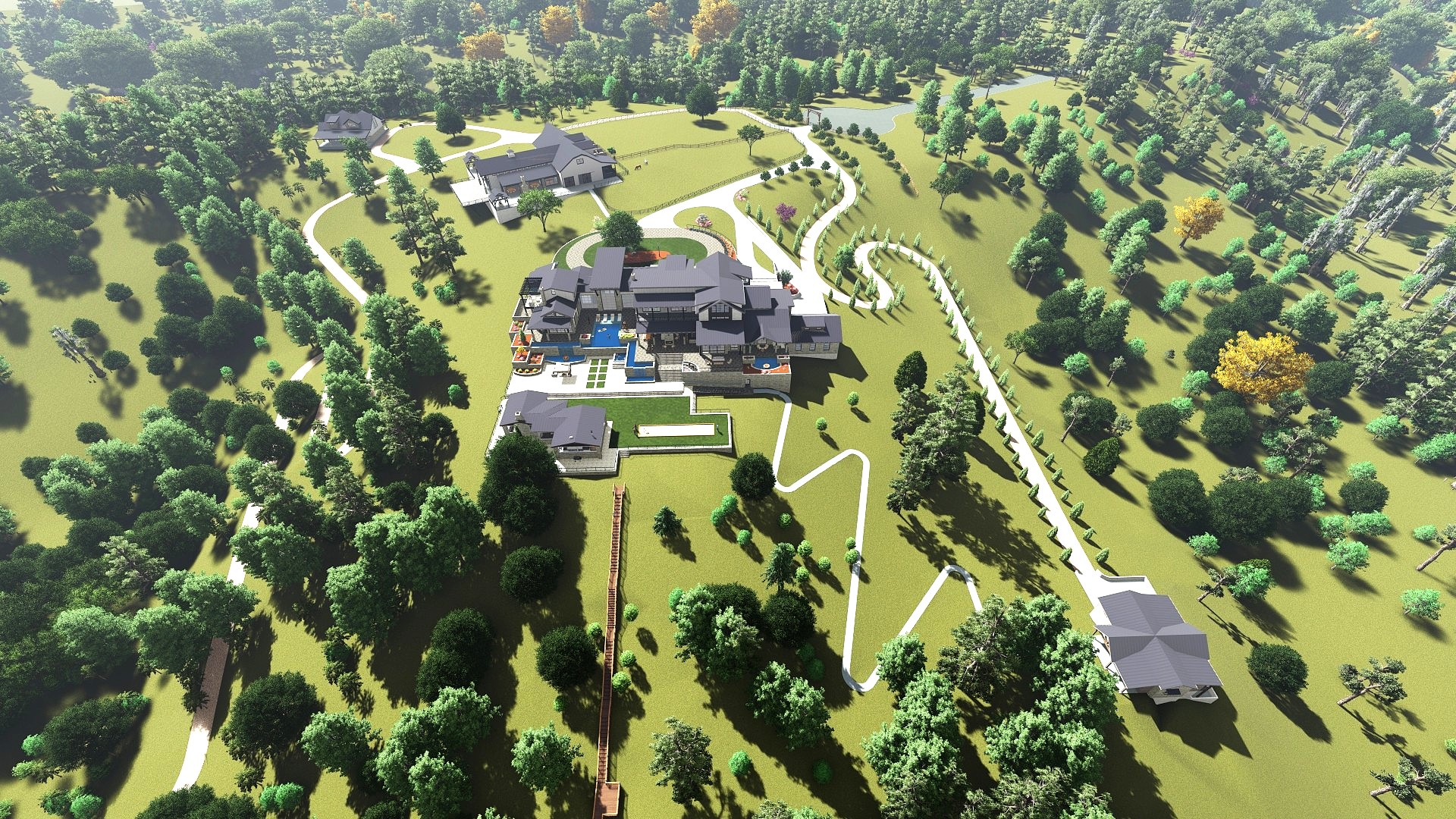
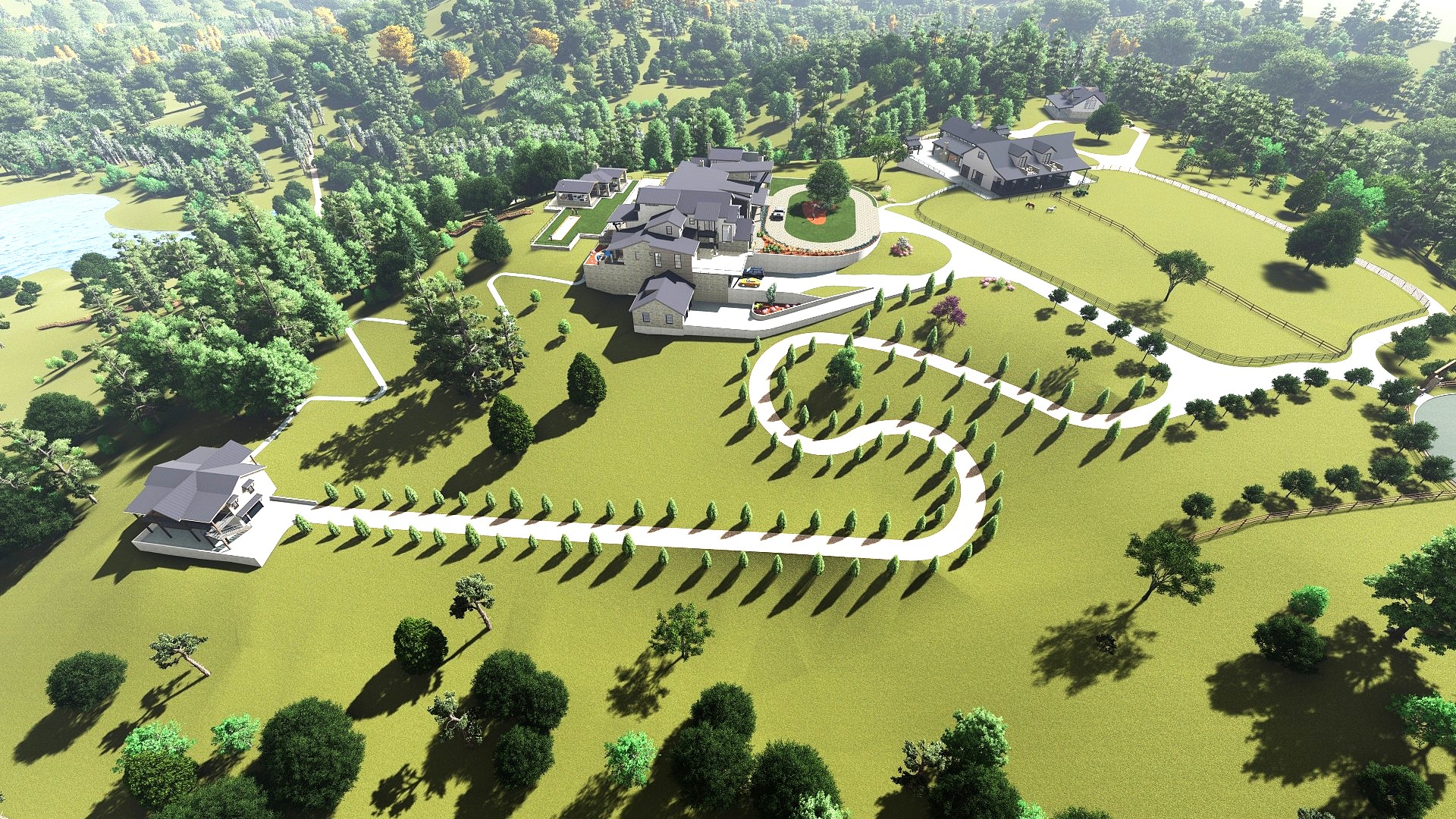
Cedar Lake Ranch is a ranch estate design developed for a steep hillside site in the Texas Hill Country. The project includes five components: an 11,000 square foot main residence, a guest house, caretaker’s quarters, and a combined stables and event barn, all designed together as a single unified property.
The program called for a fully functional Texas Hill Country equestrian estate, one that supports daily ranch and horse operations while also serving as a setting for larger gatherings and events. Those two demands shaped every decision about how the property is organized, how the buildings relate to each other, and how the site is used.
The design draws from Hill Country vernacular: metal roofs, natural limestone, cedar timber, and covered porches that connect interior living to the landscape. The hillside is treated as an asset. Long views, natural grade changes, and the sequence of arrival all shaped where buildings sit and how they relate to each other.
Property overview
The estate buildings
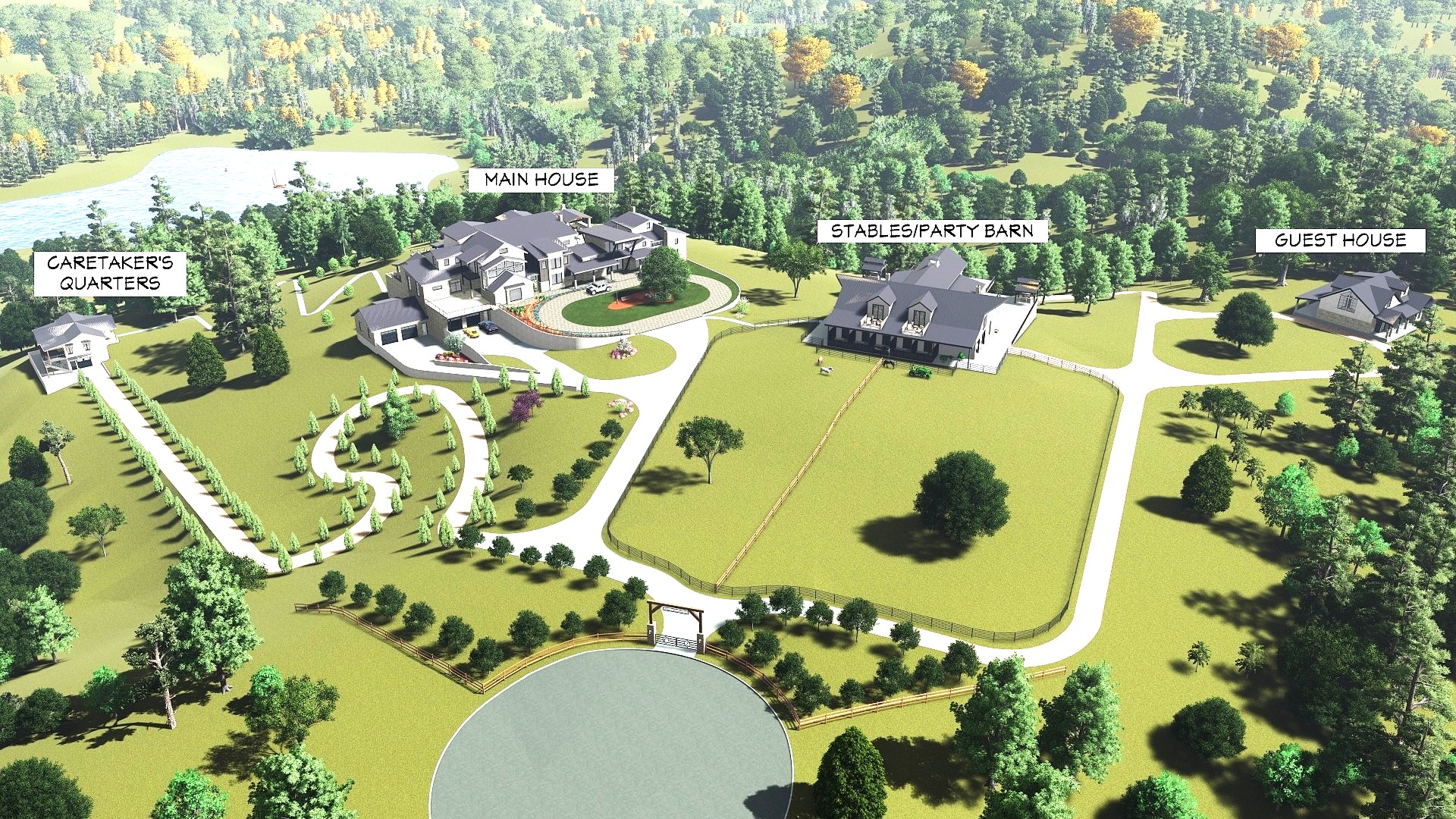
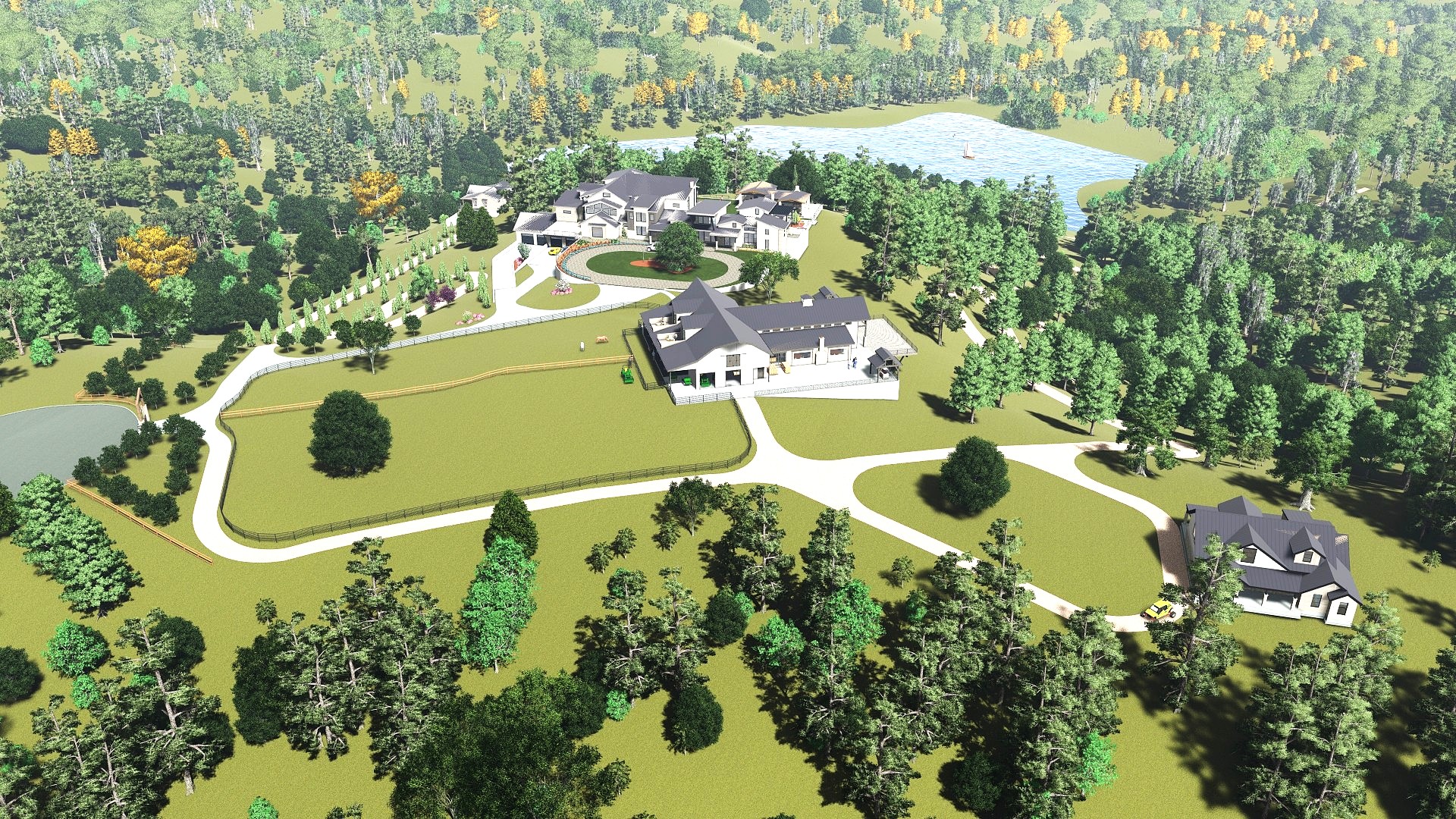
The Cedar Lake Ranch luxury ranch estate design includes four structures, each designed to serve a specific role within the overall property. A consistent design language ties them together through material selections, roof forms, and proportion. Variations in scale and detail allow each structure to respond to its specific purpose.
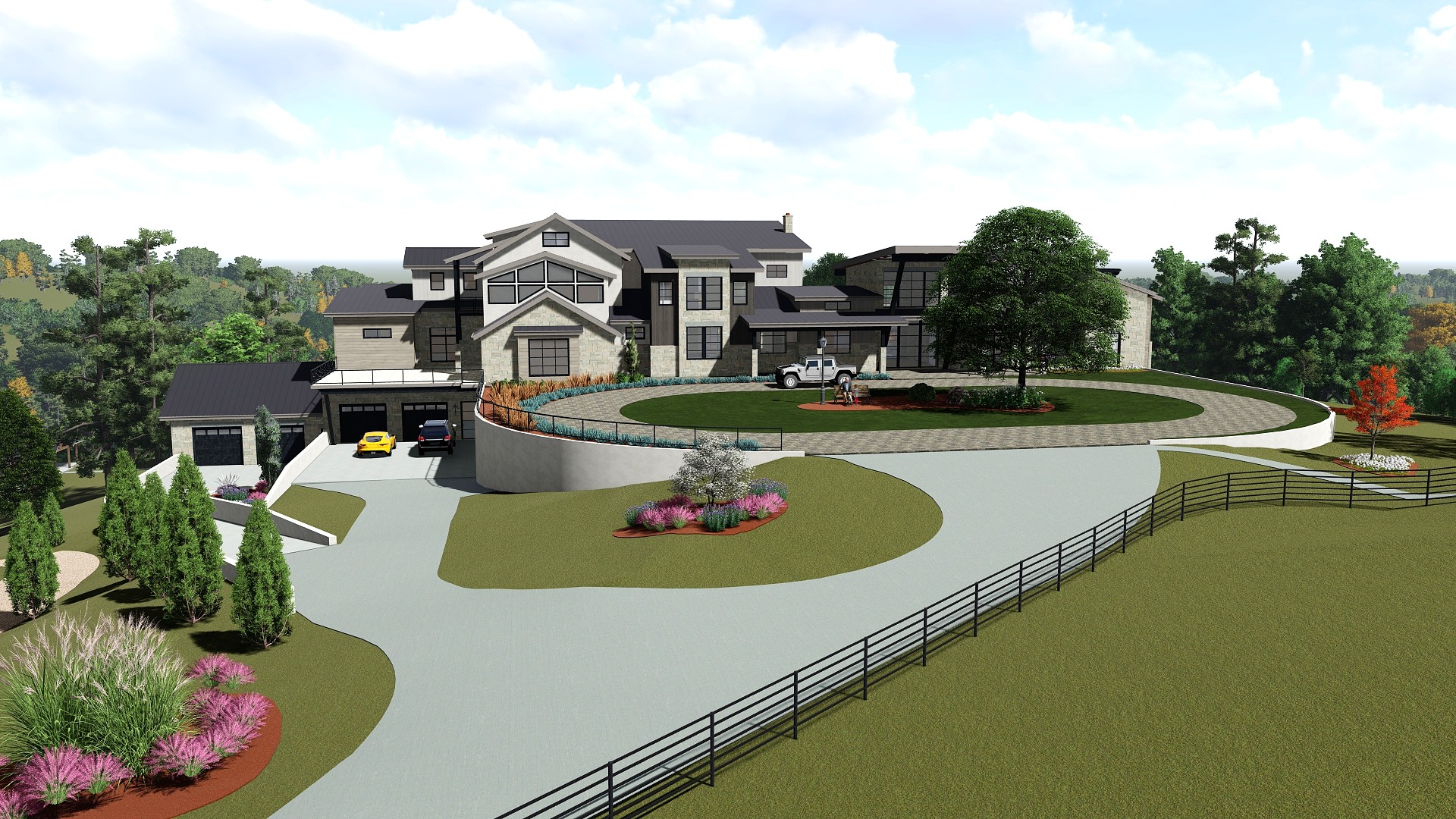
The primary residence, designed to anchor the property and respond to the scale of the site. Positioned at the high point of the property to capture long views across the terrain.
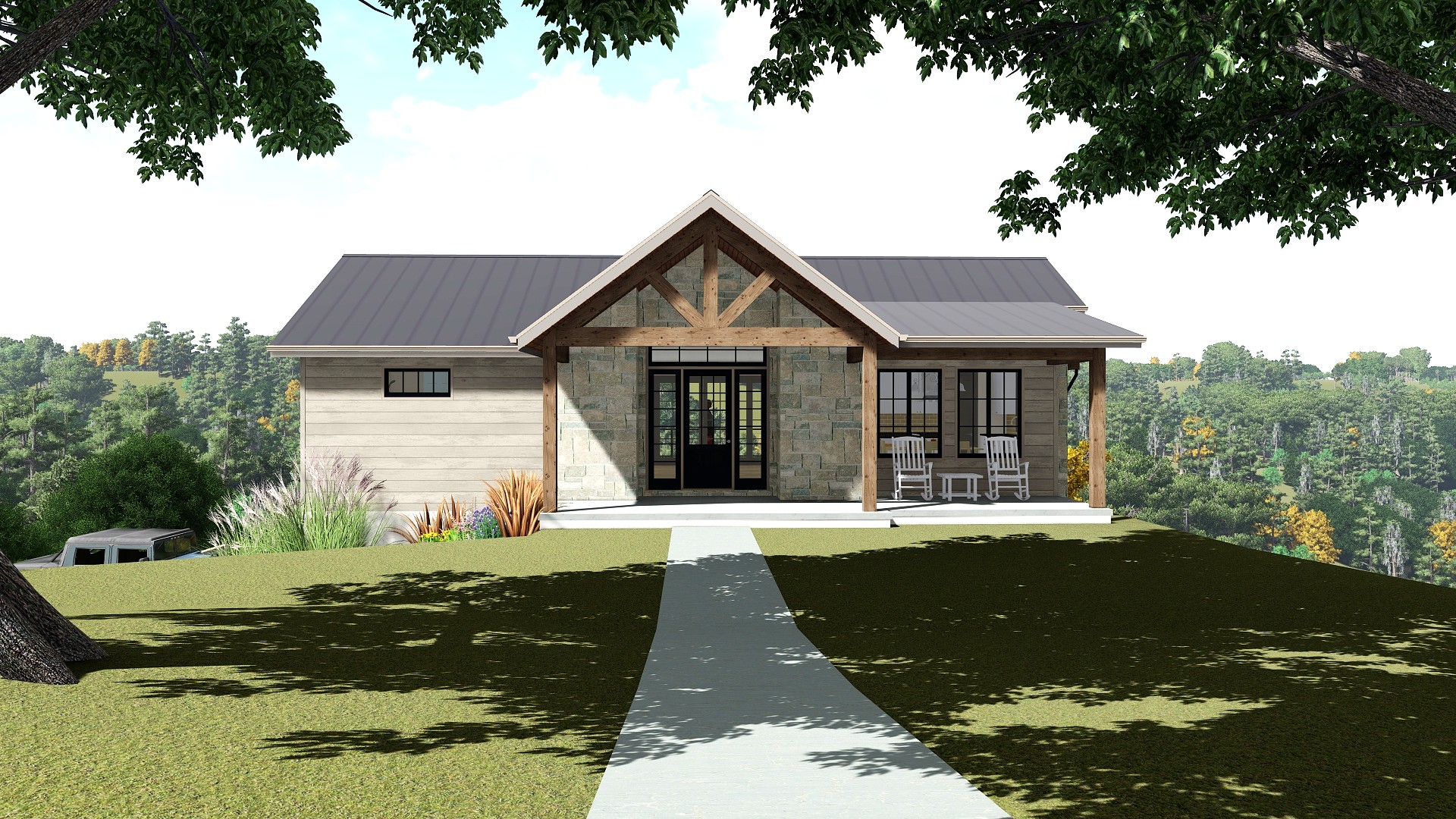
A working residence for on-site ranch staff, positioned for direct access to daily operations. Designed with the same coordination as the primary structures on the property.
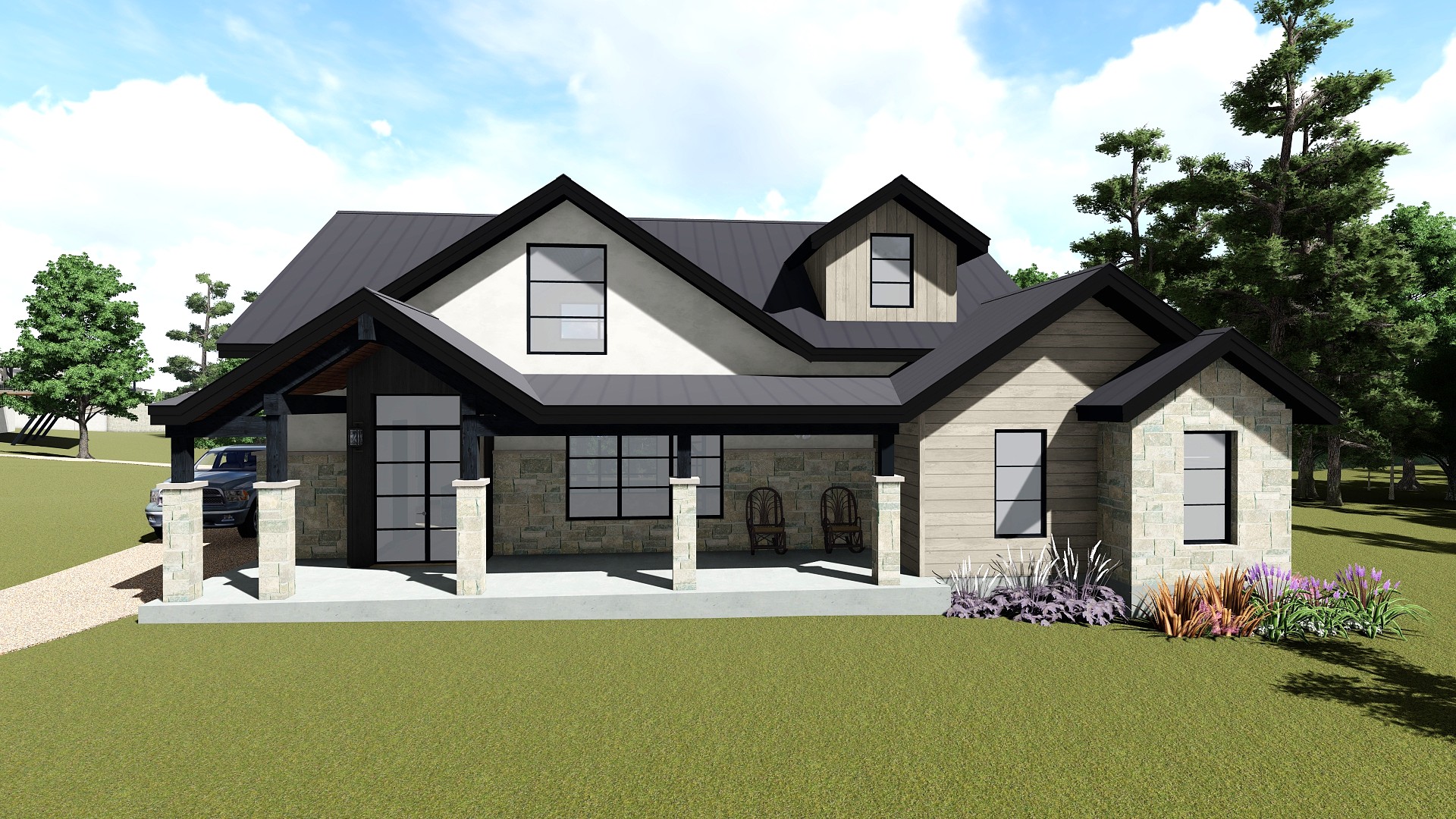
A fully independent secondary residence designed for extended stays. Planned to complement the main house while maintaining privacy and separation for guests.
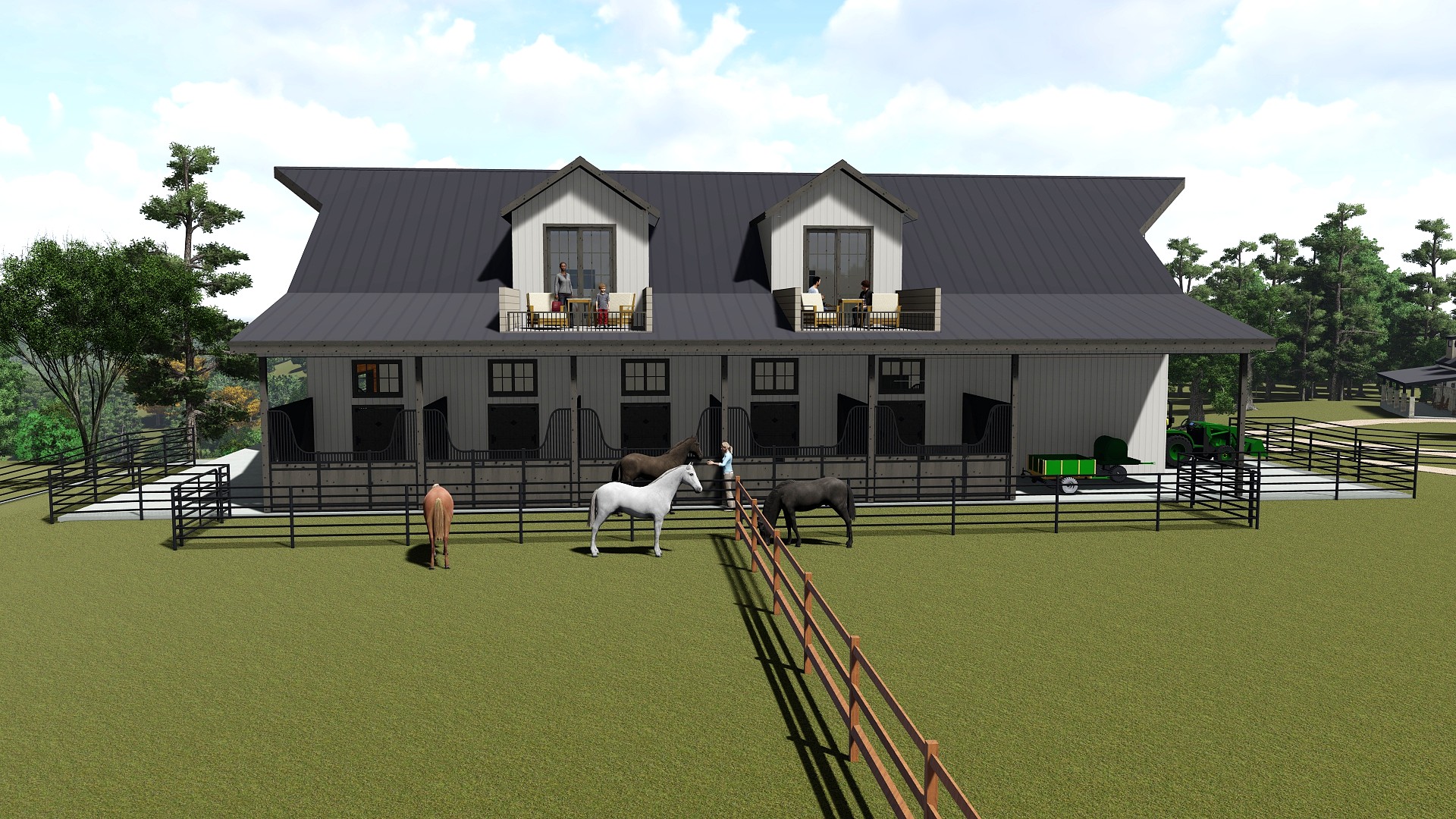
A working and gathering structure designed to support daily ranch operations and larger events. Equestrian facilities, event space, and staff quarters are organized so each function operates independently.
Site planning comes first
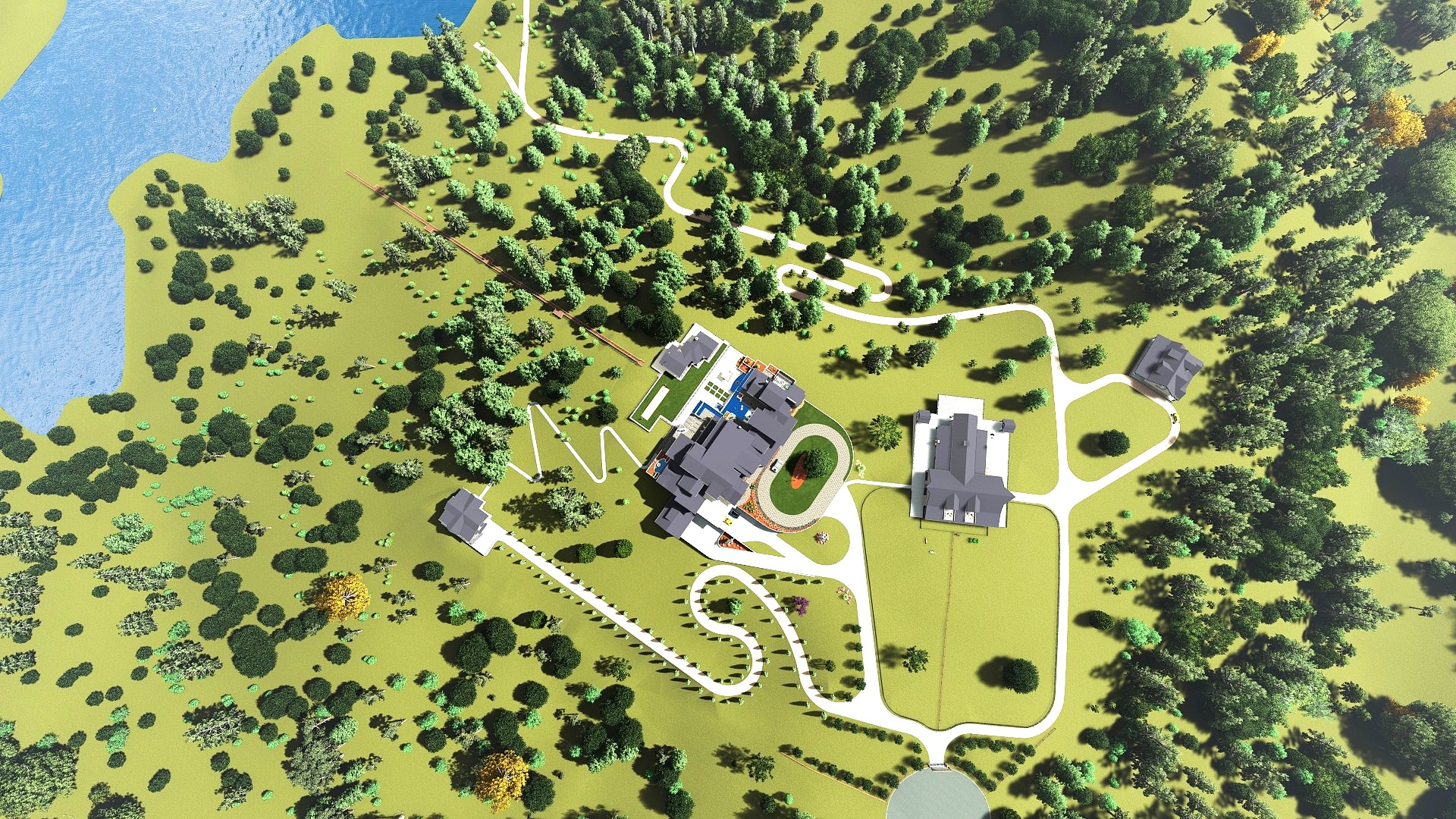
On a steep site with multiple buildings, the relationships between structures have to be resolved before any single building is designed. At Cedar Lake Ranch, the site plan was the first deliverable.
The main residence sits at the high point of the property to capture the views. Supporting structures step down the slope in a sequence that separates uses: private living, guest accommodations, staff housing, and working ranch operations, without producing a sprawling or disconnected layout.
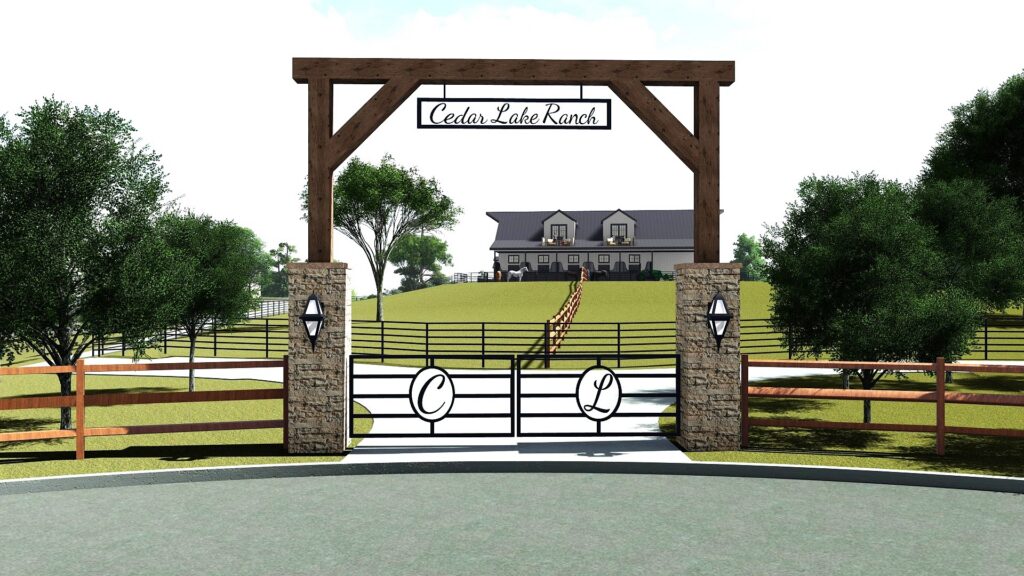
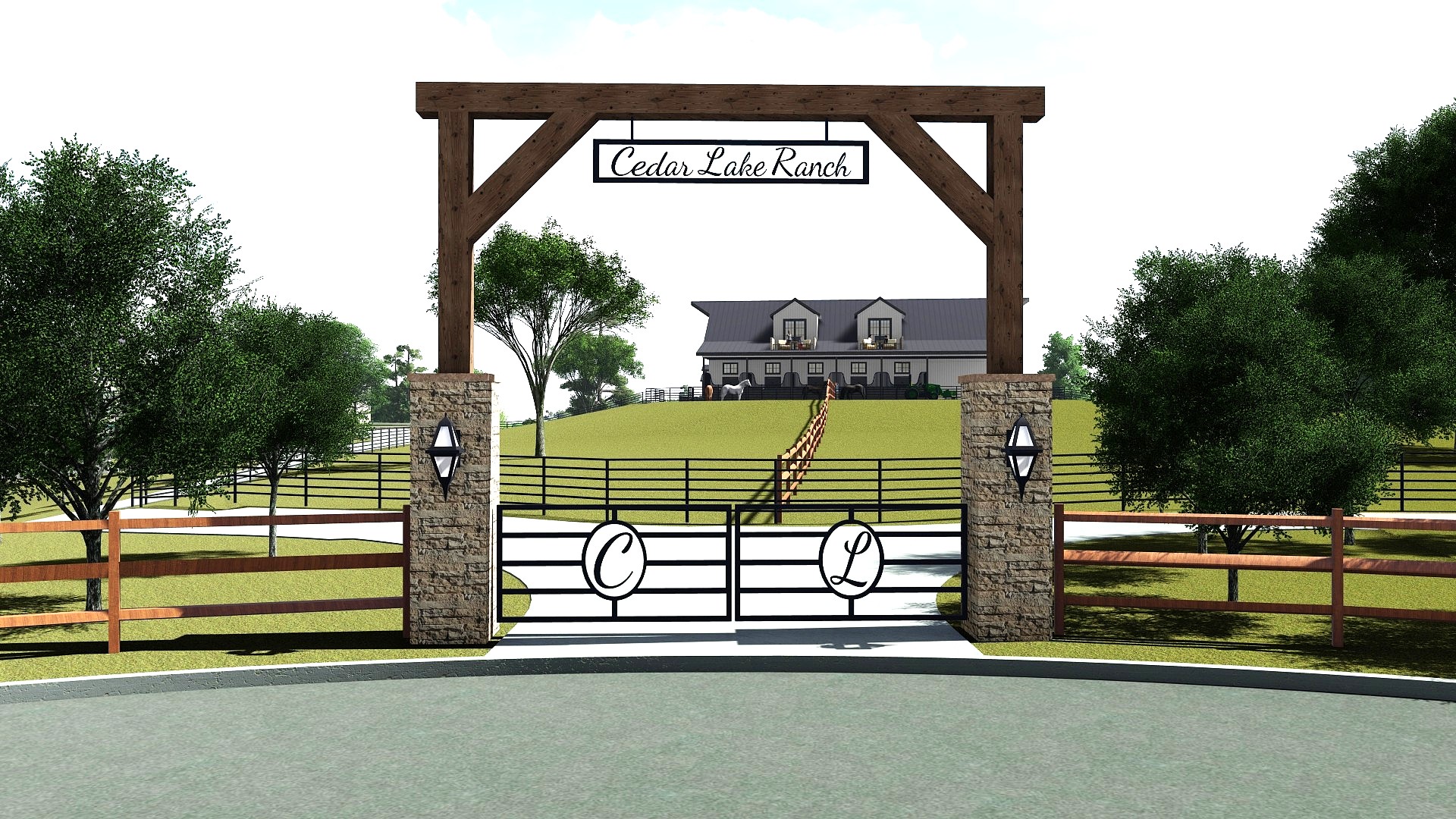
Arrival, service access, and circulation were all resolved as part of the site plan. The approach to the main residence builds through a defined entry sequence that establishes the scale and character of the property before the house comes into view. Ranch and service functions have their own access route that does not intersect with primary circulation.
The equestrian facilities are positioned to allow daily ranch operations to run independently from the main residence and guest areas. Horses, equipment, and working traffic move through their own part of the property without crossing the paths used by residents and guests.
That kind of coordination doesn’t happen automatically. A ranch estate design needs to be thought out from the beginning.
A consistent design language across the property
A ranch estate design at this scale requires more than a site plan. The buildings themselves have to feel like they belong together, even though they serve very different purposes.
At Cedar Lake Ranch, a consistent set of materials and forms ties the property together. Metal roofs, natural limestone, and cedar timber appear across all four structures. Covered porches and deep overhangs connect interior spaces to the landscape and provide shade in the Hill Country climate. Roof pitches and proportions are calibrated to each structure’s scale rather than applied uniformly, so the main residence reads as a residence and the stables read as working ranch buildings, while both clearly belong to the same property.
The Hill Country vernacular is not applied as decoration. It is the logic of the design: materials that weather well, forms that manage heat and light, and an aesthetic that comes from the land rather than being imposed on it.
How the property is organized
The property is organized around a clear hierarchy. The main residence establishes the overall character and presence of the ranch.
Supporting structures serve specific roles while maintaining separation between primary living areas, guest accommodations, staff functions, and working ranch operations.
For an equestrian ranch estate design of this scale, that separation matters practically as well as visually. Daily ranch operations, including feeding, turnout, maintenance, and movement of horses and equipment, happen on a schedule that does not align with the rhythms of the main house. Designing those functions into their own zone of the property keeps operations efficient and keeps the living areas quiet.
The same logic applies to the event barn. When the property hosts larger gatherings, the barn functions as a destination within the estate rather than a disruption to it. The site plan supports that use by routing event traffic along its own path, separate from both the residence and the working ranch areas.
Start with the right questions
Whether you’re planning a single residence or a ranch estate with multiple buildings, the process works the same way: understand the site, resolve the relationships between uses, and make key decisions before they become expensive to change.
A Texas Hill Country equestrian estate at this scale requires that kind of thinking from the start. If you have a property and a program in mind, that’s enough to begin.