

Texas Hill Country
Cedar Lake Ranch Stables & Event Barn
A hybrid structure designed to support both equestrian use and gathering space
Living Space 2120 Sq Ft | 3 Bedrooms | 3 Baths | Gathering Space 3900 Sq Ft | Stables 2206 Sq Ft

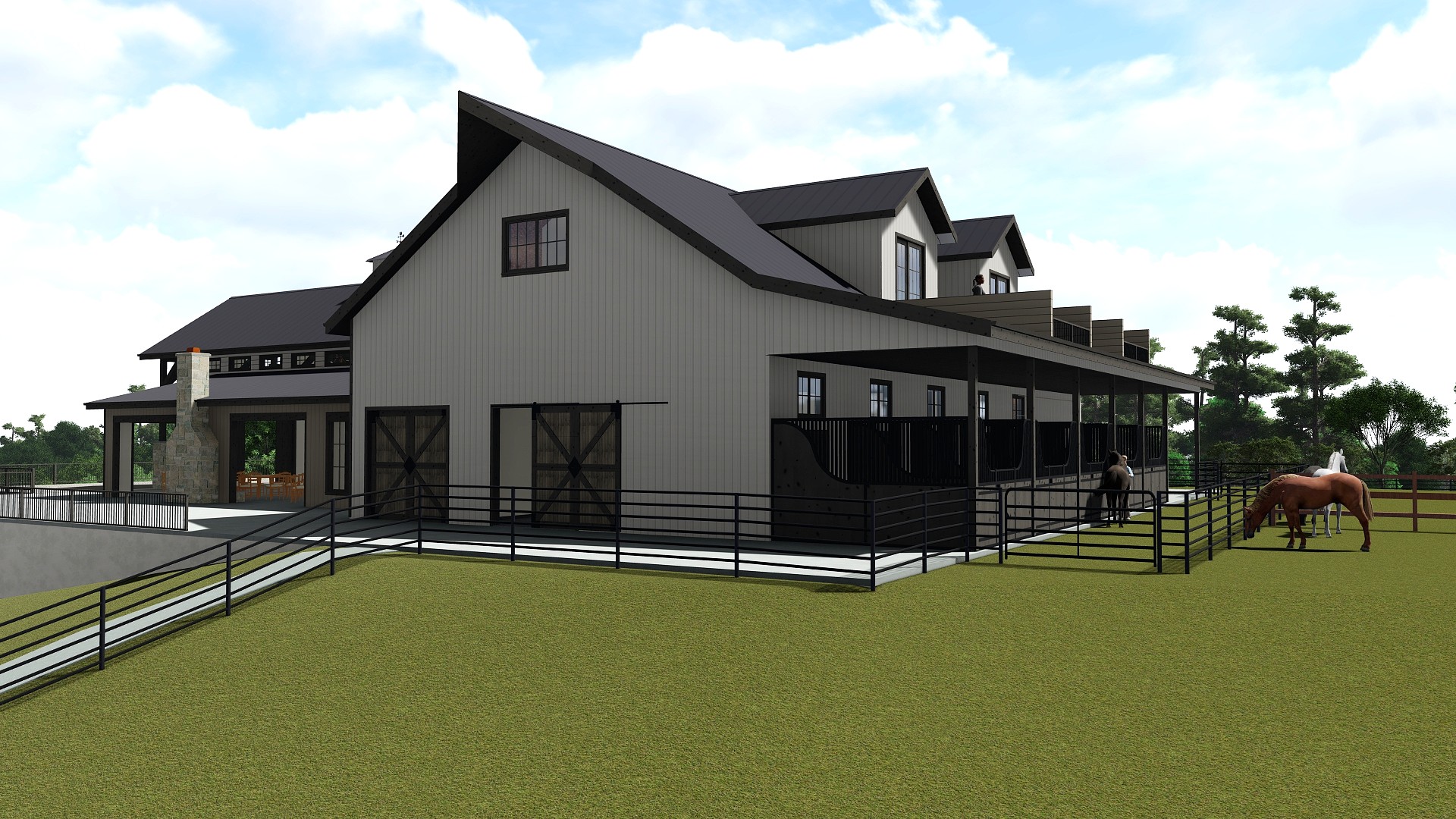
Project overview
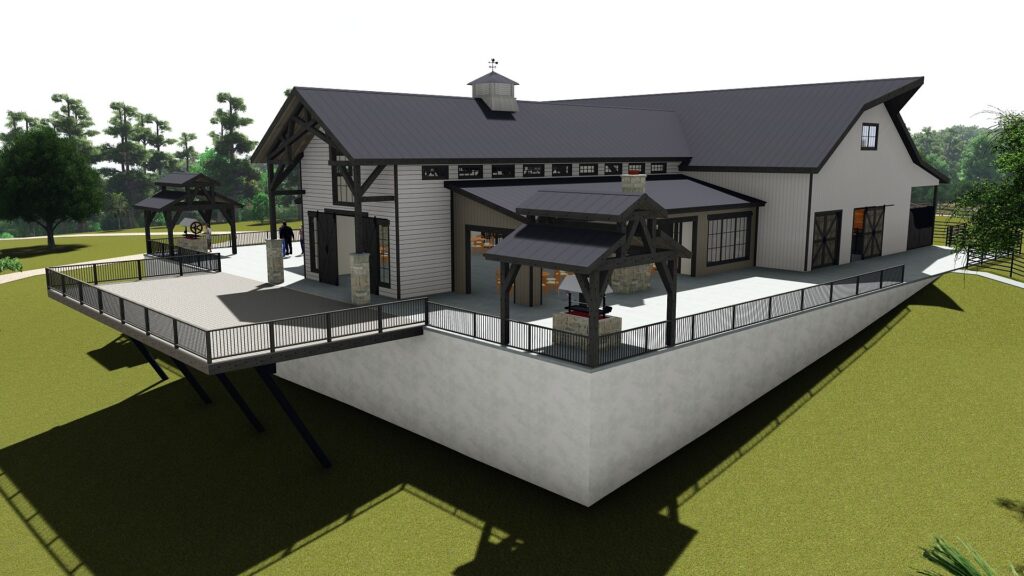
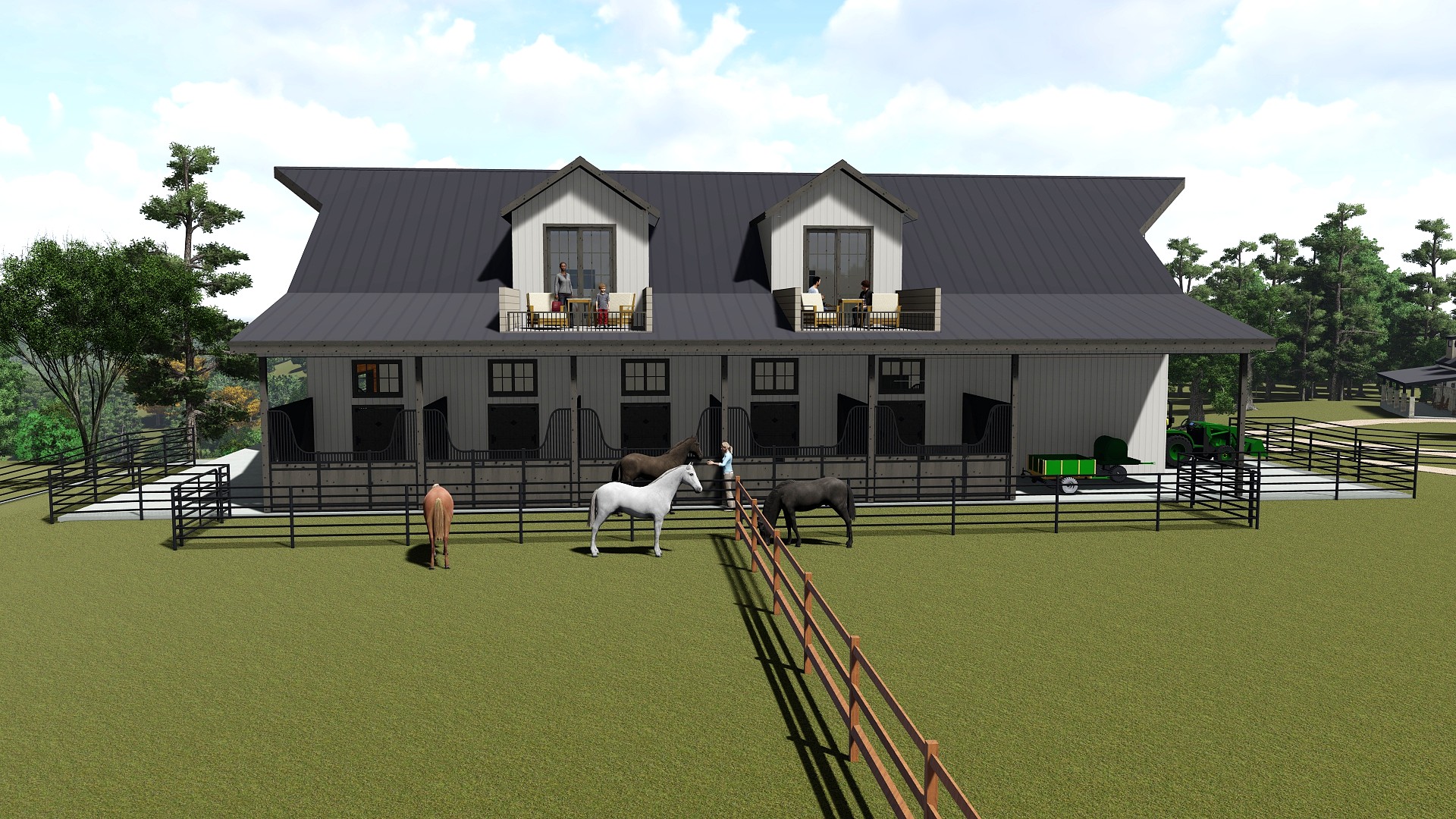
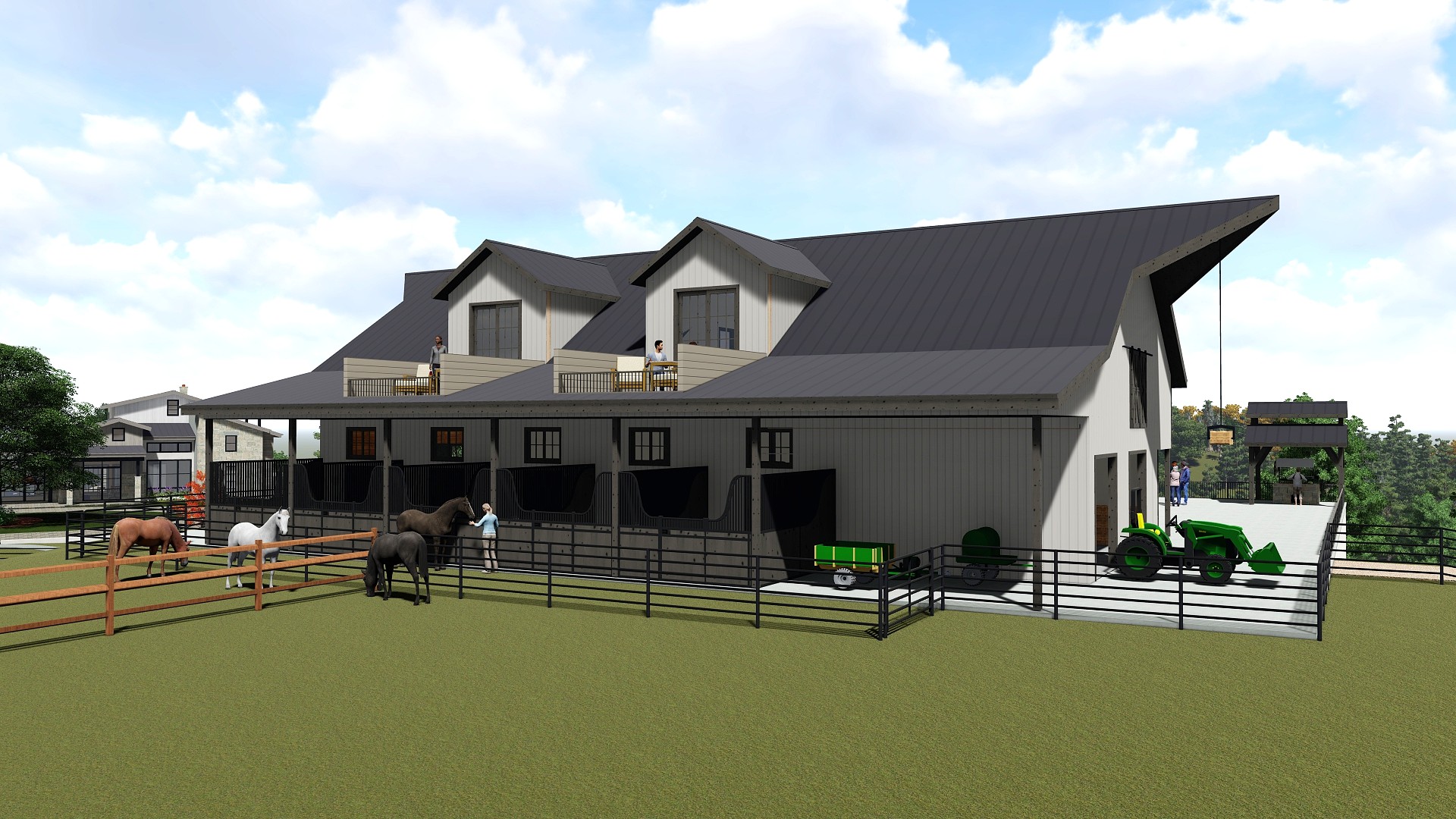
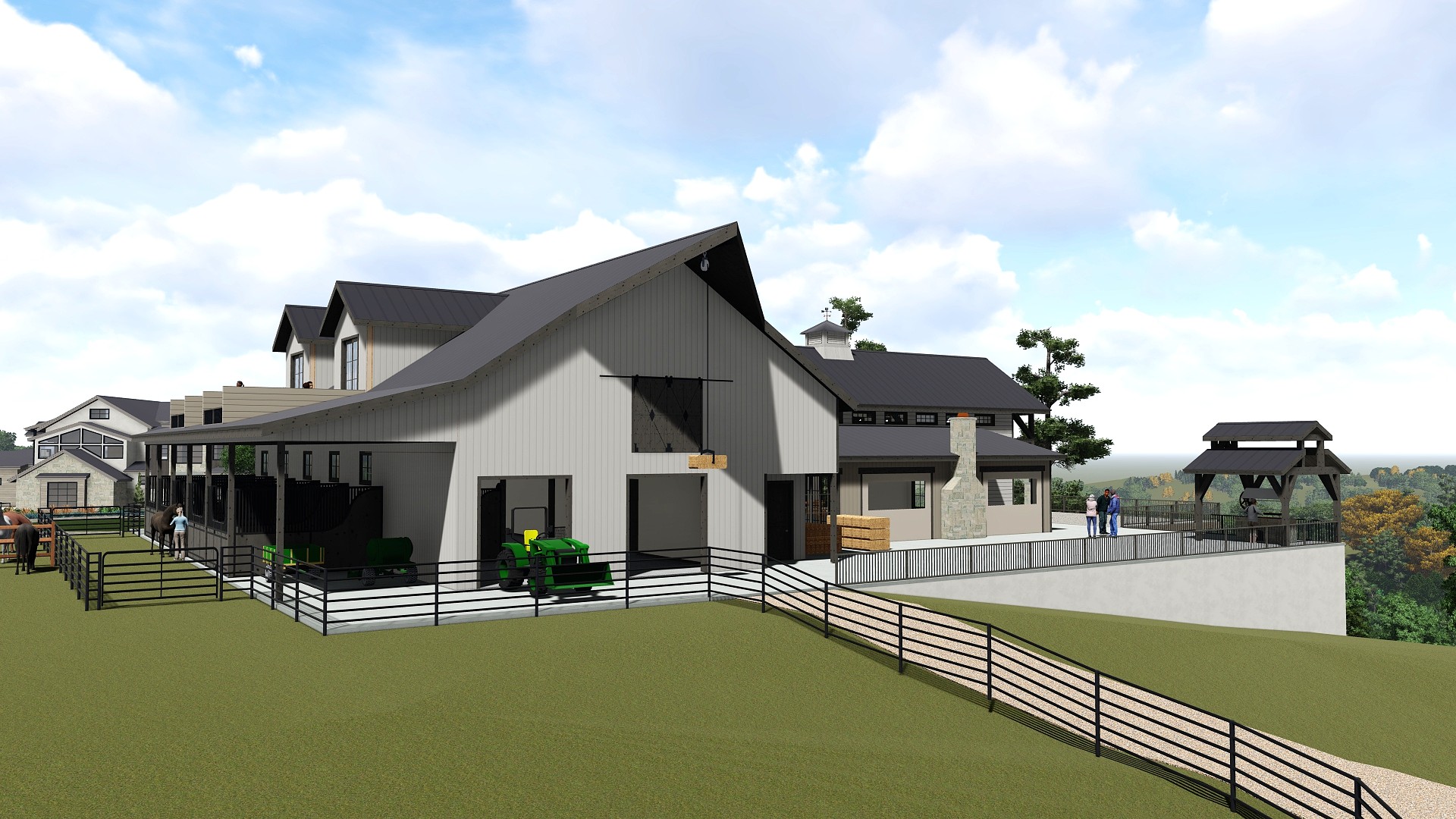
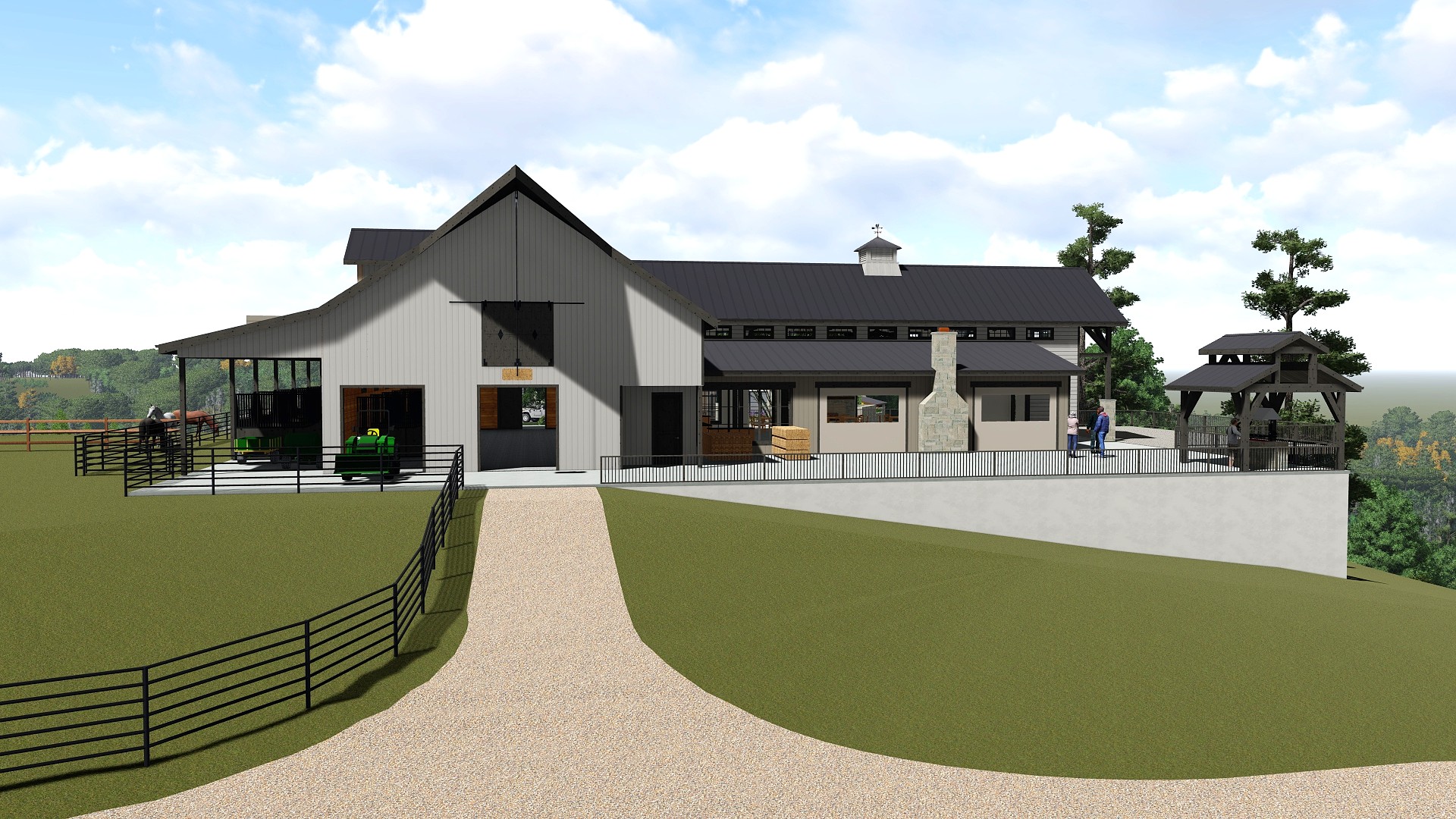
The Cedar Lake Ranch stables and event barn combines three distinct programs under one roof: working equestrian facilities, a gathering and event space, and living quarters for on-site ranch staff.
The challenge was organizing those functions so each one works independently without the others getting in the way. Daily ranch operations, large gatherings, and staff living happen on different schedules and require different kinds of access. The building is planned around that reality.
Site response
The stables and event barn is positioned to keep working ranch traffic separate from the main residence and guest areas.
The building creates a defined edge between the developed estate and the working ranch land beyond it. That placement is practical: equipment, feed deliveries, and daily horse movement stay on their own route without crossing paths used by residents and guests.
When the event barn is in use, the same logic applies; event traffic arrives and parks independently without disrupting the rest of the property.
Program organization
The building is organized into three zones, each with its own access and circulation.
Equestrian areas are arranged to allow for efficient daily use, including access, storage, and movement of animals. These spaces are practical, durable, and directly connected to the surrounding property.
The living quarters are set apart from both the equestrian and event areas, with their own entry and outdoor space. Ranch staff can move between their quarters and the working areas of the property without passing through the gathering spaces.
Circulation and access
Three separate access routes serve the building: one for ranch operations, one for event and gathering use, and one for staff. Keeping those routes independent is what allows the building to host a large event and run normal ranch operations on the same day without either one interfering with the other.
That kind of separation doesn’t happen by accident; it has to be planned into the site layout from the start.
Structure and buildability
The gathering space requires large open spans, with no columns interrupting the floor area. The equestrian facilities require durable materials and direct connections to the exterior.
The living quarters of the stables and event barn require a separate structural bay with its own foundation conditions. Coordinating those three sets of requirements into a single building envelope was resolved in the design process, not left for the builder to figure out in the field.
Outdoor integration
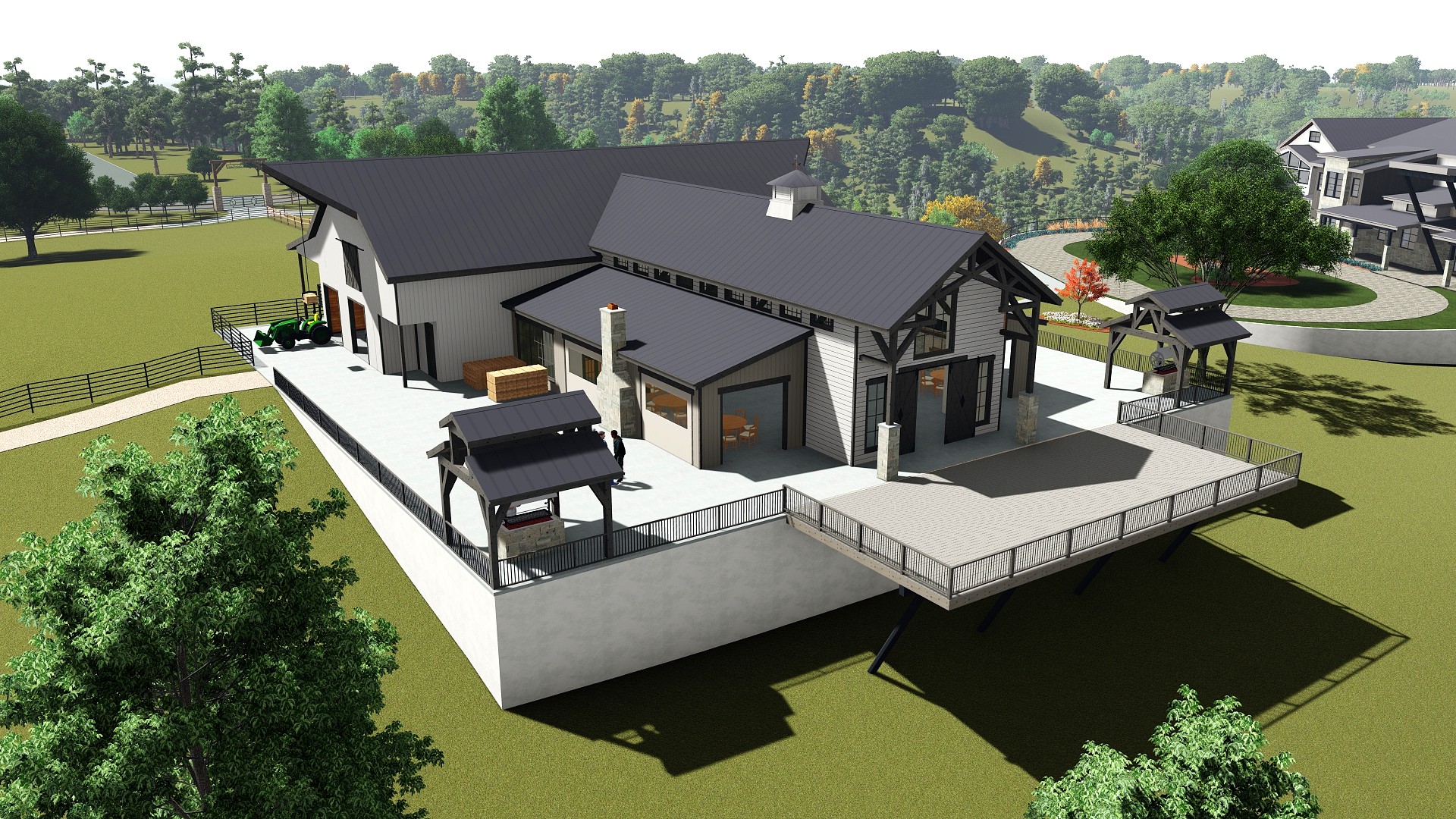
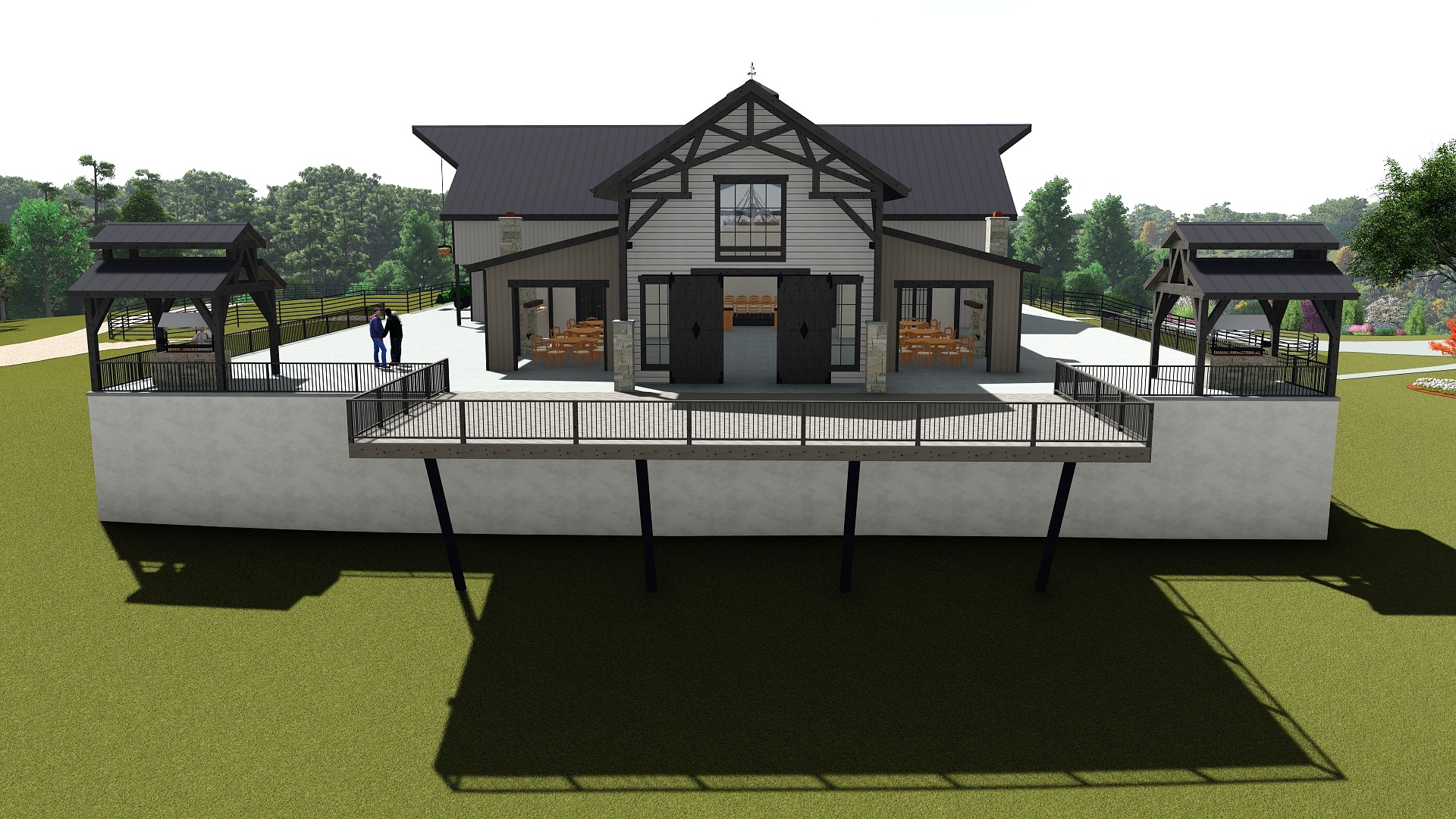
Covered outdoor areas extend from the event barn on the gathering side of the building. When the barn is in use for larger events, those covered areas allow the space to expand — guests move between interior and exterior without a hard boundary.
On the equestrian side, covered runs and exterior work areas connect directly to the stall access so daily ranch operations stay practical in all weather. The outdoor spaces aren’t decorative. They’re part of how the building works.
Materials and character
The stables and event barn uses the same material palette as the rest of the Cedar Lake Ranch estate: wood timbers, stone, and metal roofing.
At this building’s scale, the structural elements are expressed rather than concealed; heavy timber framing in the gathering space reflects how the building is built and gives the interior its character. The materials are selected for durability in a working ranch environment, not just appearance.
Project summary
A working ranch barn and an event venue are not an obvious combination. Making them work together in a single building required resolving the program, the site placement, the structural system, and the circulation all at once. Each decision affected the others. That’s the kind of coordination that has to happen in the design phase — once construction starts, reorganizing a building of this complexity is not a realistic option.
That’s the kind of coordination that has to happen in the design phase because once construction starts, reorganizing a building of this complexity is not a realistic option.