Why Most Custom Home Budget Overruns Start Before Construction
What homeowners need to understand before committing to full design
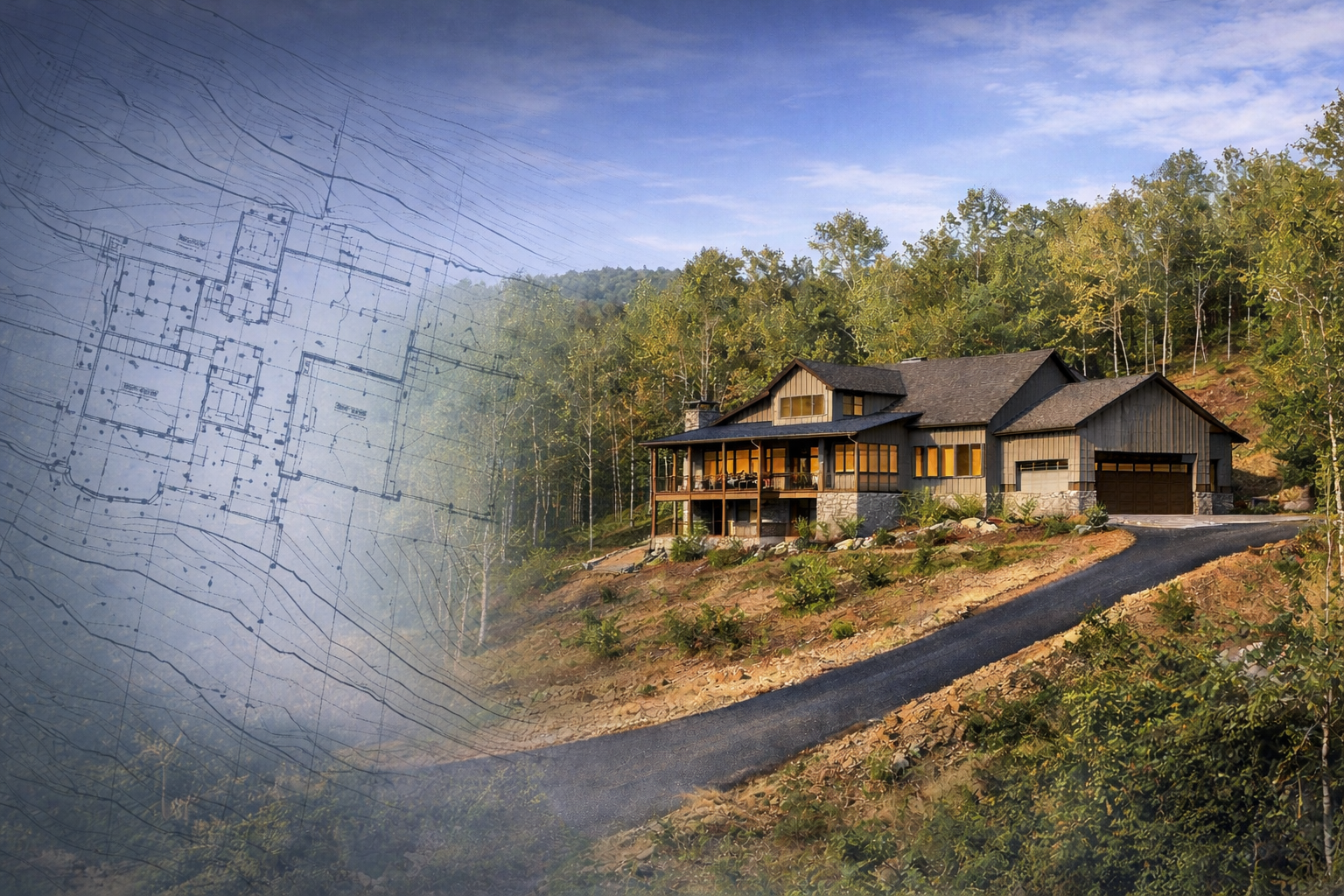
Thinking about building a custom home?
Building a custom home is one of the largest financial decisions most people will ever make. Yet many projects run into trouble long before construction begins - often because critical feasibility questions were never fully addressed.
Before floor plans, elevations, or construction drawings are created, homeowners need clarity on one fundamental issue:
Does this home actually work on this property - and within the intended budget?
Failing to answer that question early is one of the most common causes of design revisions, construction delays, and budget overruns.
The Hidden Risk in Skipping Feasibility
Many homeowners assume the design process starts with drawing the house. In reality, successful custom homes start with understanding the site.
Every property has constraints - some obvious, others hidden - that directly impact design complexity and construction cost. These can include:
- Sloped or irregular terrain
- Setbacks, easements, and zoning limitations
- Soil conditions and foundation requirements
- Driveway access and grading challenges
- HOA or architectural review restrictions
- Utility availability (or lack thereof)
When these factors are discovered after design is underway, the result is often rework, compromises, and unexpected costs.
In other words, budget overruns often begin before construction ever starts.
Why Budget Overruns Start Early
Most cost surprises don’t come from extravagant finishes or last-minute upgrades. They come from site-driven issues that were not accounted for early enough.
Examples include:
- Foundations becoming more complex due to slope or soil conditions
- Floor plans needing to be reworked to meet zoning or setback rules
- Driveway lengths or grades requiring additional retaining walls
- Structural systems changing to accommodate site constraints
Each adjustment ripples through the design and construction process, increasing costs and timelines.
A feasibility-first approach helps surface these cost drivers early - when decisions are easier and far less expensive to adjust.
What a Feasibility Study Actually Does
A feasibility study is an early planning tool designed to answer one question clearly:
Is this project realistic, buildable, and aligned with your budget expectations?
At Showvaker Residential Design, a feasibility study focuses on:
- Evaluating site constraints and opportunities
- Reviewing zoning, setbacks, and applicable regulations
- Exploring layout concepts appropriate for the property
- Identifying construction and cost-driving factors
- Providing clear guidance on next steps
This is not a final design or permit-ready set of drawings. Instead, it is a strategic planning step that helps homeowners make informed decisions before committing to full design services.
Why Experience Matters at This Stage
Feasibility work requires more than design skill - it requires a deep understanding of how homes are actually built.
With decades of hands-on construction experience across multiple trades, combined with professional building design expertise, I approach feasibility from a constructability and budget-awareness perspective, not just an aesthetic one.
That experience allows potential problems to be identified early - before they become expensive surprises during construction.
The Outcome: Clarity and Confidence
Homeowners who start with feasibility gain several important advantages:
- Clear expectations about what the site will support
- Fewer design revisions later in the process
- Better alignment with builders and consultants
- Reduced risk of budget overruns
- Confidence before investing in full design services
Just as importantly, feasibility gives homeowners the freedom to decide how, and whether, to move forward, based on real information instead of assumptions.
Who Benefits Most from a Feasibility Study?
A feasibility-first approach is especially valuable if you are dealing with:
- Sloped or mountain properties
- Narrow or irregular lots
- Rural land with limited utilities
- HOA or architectural review requirements
- Budget sensitivity or fixed financing limits
If your property is anything other than flat, unrestricted, and straightforward, feasibility is not optional - it’s essential.
Plan Smart from the Start
Custom homes succeed when decisions are made in the right order. Starting with feasibility protects your investment, your timeline, and your peace of mind.
If you are in the early planning stage and want clarity before committing significant dollars to design or construction, a feasibility study is the smartest first step.
👉 Learn more at www.showvakerdesign.com
—or email us at curtis@showvakerdesign.com to discuss your property and goals.